The Changing Style Story: What Is Trend in Fashion and Why It Matters
In that regard, fashion can be likened to a discourse that never ends. While one season may be characterized by laid-back tailoring styles, another season sees people gravitating towards old-fashioned styles, soft textiles, and entirely new colors. What is trend in fashion is a fascinating one influenced by a number of aspects, including culture, creativity, technology, celebrities, fashion designers, and regular people. The concept of fashion trend takes on a much clearer perspective when trends are no longer perceived as simple fashion rules that guide dress code but rather as social events that evolve from shifting preferences.
The Definition of Fashion Trend
Fashion trends refer to styles, designs, colors, materials, silhouettes, or ways of dressing that become increasingly popular during a certain period of time. Fashion trends can be observed not only in clothing but also in footwear, accessories, hairstyles, and makeup, as well as the overall combination of clothing.
For example, imagine that you are just walking down the street during an average day in the city. It is possible to see several people dressed in oversized jackets, wide-leg pants, and metallic jewelry or wearing a certain type of sneaker. However, none of them planned to wear such clothes on purpose.
They were probably affected by the same cultural messages that appeared all over the media, stores, entertainment, and fashion magazines. The shared experience in terms of being exposed to the same information becomes the reason why the fashion trends become so fascinating.
How Fashion Trends Begin
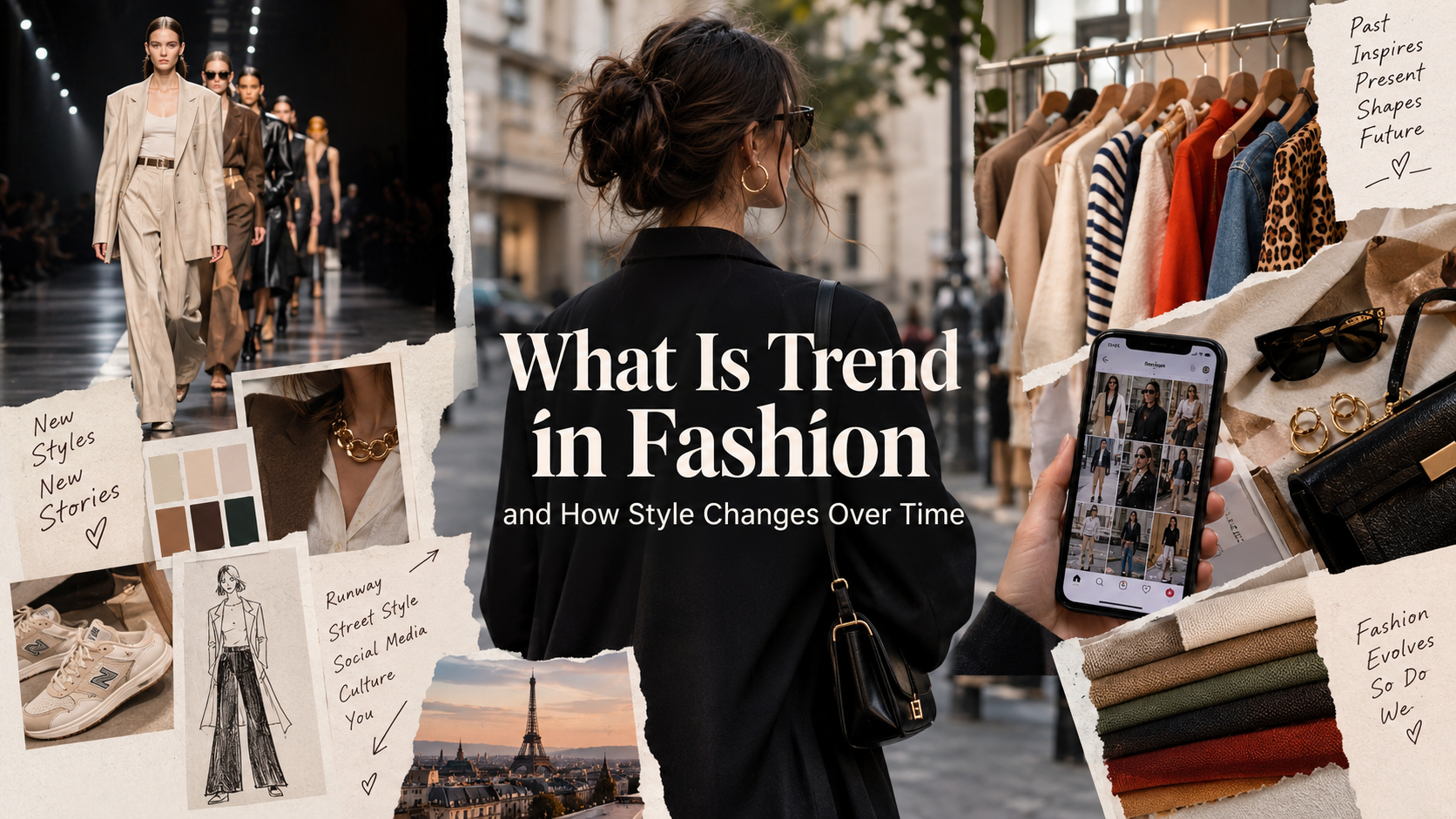
The sources of fashion trends could be varied. In a traditional way, fashion houses used to play an active part through launching new collections in fashion week. In the modern world, the situation changed drastically.
A trend can emerge from:
- Designer collections
- Street style
- Social media platforms
- Music and entertainment
- Film and television
- Historical fashion
- Youth culture
- Sports and athletic clothing
- Economic and social changes
- Celebrity appearances
- Online communities
Sometimes a designer creates something new and consumers adopt it. At other times, consumers create a look themselves, and designers later respond to that interest.
Among many examples, street style should be highlighted. It may serve as the starting point that can inspire photographers, creators, merchants, and even designers. It should be noted that the direction of influence is not always from the catwalk to the people anymore. Increasingly, inspiration can move in both directions.
Designers and Fashion Brands’ Role
Today designers continue to play an essential role in the formation of fashion. Collections presented during big fashion weeks can bring into fashion new shapes, fabrics, colors, and styling that can affect the industry for months or even years to come.
Nevertheless, a runway collection cannot be taken as a readymade list of clothes everybody should purchase. Runway fashion is often made to represent an art concept. An exaggerated coat or shape can inspire making something more moderate for daily use.
In some way, this process is similar to storytelling. A designer introduces his/her visual concept, which is then interpreted by buyers and fashion editors and adapted by retail companies and then finally chosen or declined by customers.
Some ideas from runways never come back, while others define fashion trends for years to come. In many cases, it all depends on such aspects as practicality, cultural climate, and demand.
Why Trends Change So Quickly
Fashion has been evolving from the beginning of time; however, digital technology has made that evolution much faster.
A trend that took months to get across cities can be spread across the globe in a few hours. Celebrity sightings, runway shots, or videos of celebrities going viral can spread that aesthetic to millions of people.
There has also been a cycle created by social media. Someone sees something they like, recreates it, modifies it, and then spreads that around themselves. This makes an entirely new avenue for ideas.
However, this can lead to the fashion world feeling very disposable because a trend can emerge in one month and die off a few months after.
What we have is a fashion world where it has become easier to change aesthetics than before.
Impact of Social Media on Fashion
One of the most powerful influences on contemporary fashion is social media. Social networks based on image content give a chance to showcase an outfit, find inspiration, and participate in the creation of new aesthetic concepts.
It is not necessary to be a stylist to become a source of inspiration for others. Any creator with his own approach to fashion, the way he styles regular clothes, may become popular among thousands of viewers and gain many followers.
It has transformed the relationship between the consumer and the fashion world, as a person can discover trends himself without reading magazines and looking for information from big fashion brands.
At the same time, there is another disadvantage to this fast pace. With the constant appearance of new trends, people may think that their style should change every two weeks. But there is no need to follow every single trend.
Celebrity Culture and Fashion Trends
Celebrity culture has affected people’s fashion sense for many years now. Celebrities in the form of actors, singers, sports players, and many others can create a sensation by choosing particular items of clothing.
It is not necessarily planned by celebrities to do so. It could just be something that the celebrity likes; however, pictures shared through websites and social media would make the look a trending topic.
There is another important part of entertainment that also had a huge impact on the fashion industry. Music has had its own unique trends of clothes, hair, and accessories for each style period. Fans would also embrace some of the trends because clothes represent one’s culture.
That is why fashion is inseparable from entertainment because everything people see and hear affects their choices in clothes.
Culture’s Role in Fashion
Fashion is often reflective of the culture it originates in.
It can be impacted by the traditions, events, weather, religion, music, art, and even movements of a culture. The clothes may hold significant historical significance, while other pieces are created using the designs of the past as inspiration.
The global village that we live in today has also increased the exchange between cultures. Both the designer and the customer are now exposed to styles and trends from all corners of the globe, thus increasing possibilities of creating something entirely new.
However, cultural inspiration should be approached with caution. Using the traditional outfits or designs for decorative purposes without understanding the significance of them may raise controversies.
The Return of Older Styles
One of the most interesting things about fashion is that old-fashioned trends never really vanish completely.
A silhouette that was popular in one decade could come back into fashion decades later in an altered version. The clothing of the past could be fashionable because people are drawn to its personality, design, or era.
Fashion does not move along a linear path; it operates on a more circular one. Fashion creators and consumers alike constantly look back while inventing something new.
Revival of old-fashioned trends is not always a literal process. Old-style fashion tends to take one clear-cut element from the past and combine it with something new.
For instance, vintage-looking jackets would be worn with contemporary shoes. A vintage silhouette can be remade in contemporary material.
Trend Versus Personal Style in Fashion
Being fashionable does not equate to losing your individuality.
A trend is defined as what is becoming popular, whereas personal style is what defines how an individual dresses. It is possible for someone to like what is being worn by everyone without necessarily making them blend in completely.
For instance, there is a girl who likes wearing plain and neutral colors of clothes. She could try out the latest shape but will not change all her other clothes. The other person could like bright colors and just add one bright fashionable color into her outfit.
This way, fashion becomes more personalized. People need not worry about whether something is popular; rather, they need to consider whether it suits them.
That is where fashion becomes personal rather than simply commercial.
What Is Trend in Fashion? A Closer Look at Its Life Cycle
Understanding what is trend in fashion also means understanding that trends usually have a life cycle.
The trend could start from experimentation. Creators and designers try an idea that draws only some attention in the beginning. With more attention being paid to the style, the style becomes easier to access and discuss.
Later on, retailers can come up with cheaper products of the same style, and the trend becomes known among a wider audience. The style can then become highly visible.
Following the phase of popularity, the interest might fade, and people start looking for something else to occupy their interest.
But the fading of interest is not an indicator that the trend dies off forever. In many cases, the trend comes back after years of being forgotten.
The Importance of Fashion Weeks
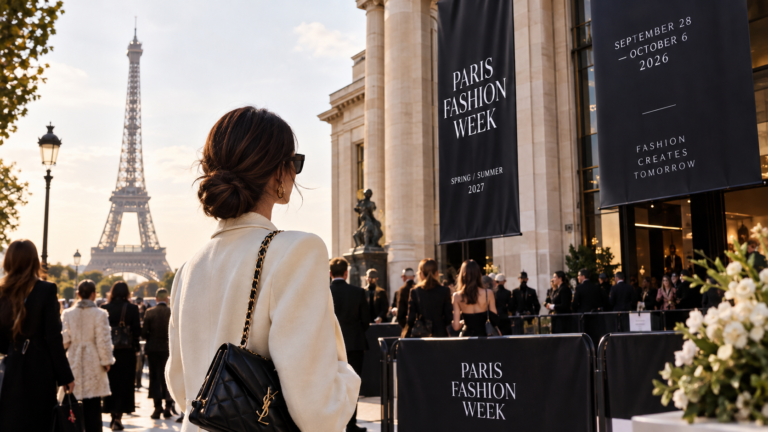
Fashion weeks continue to be relevant due to their ability to connect the designer, buyer, fashion journalist, photographer, and fashion audience.
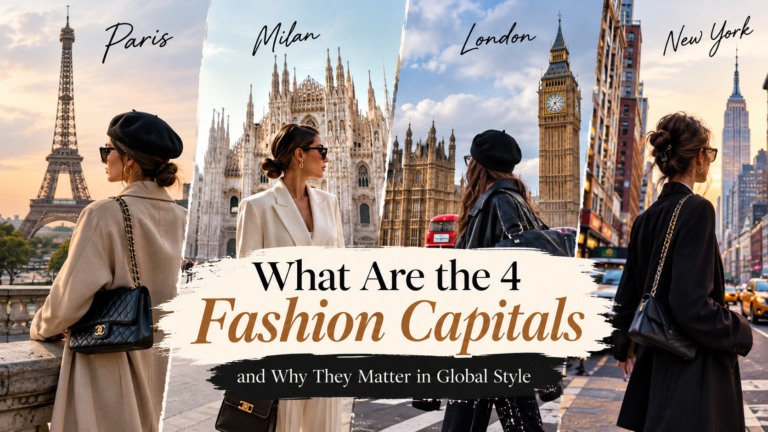
There are fashion cities where major events happen; in particular, such cities include Paris, Milan, London, and New York. In such fashion cities, designers display their seasonal collections that represent some ideas for the future direction of fashion design.
However, fashion weeks do not make up the only element of the modern fashion trend cycle. The role of street fashion, social media influencers, retailers, the music industry, and consumers also matters in the fashion trends’ development.
It leads to a peculiar connection between fashion and people’s wardrobes when something fashionable appears on the catwalk and then becomes simplified and gets into the wardrobe of many other people.
Fast Fashion and Trend Speed
Fast fashion has altered the speed at which trends go from inspiration to mass market clothing.
If a style is trending online, retailers will be able to respond swiftly by creating inexpensive versions of the style. This helps make trendy styles available to consumers who may not buy designer clothes.
The speed at which fast fashion creates clothing brings up issues like waste, consumption, resource usage, and quality. People may feel motivated to swap out their clothing when the trends move quickly.
One of the reasons for this is the fact that sustainable fashion conversations have gained relevance over time. Instead of seeing every trend as requiring the acquisition of new clothing, people can play around with outfits they already have.
A slight variation in accessorizing, shoes, color coordination, or layering can make the wardrobe appear different.
Sustainable Fashion and Evolving Consumers’ Buying Patterns
Sustainability is impacting the approach to fashion of many individuals.
Secondhand purchasing, exchange of outfits, mending clothes, buying less but functional items, and opting for quality fabrics can help prolong the life span of outfits.
The interest in the vintage or resale industry is rising as well. The second-hand outfit will always have one unique advantage that factory-made clothes do not have—uniqueness.
Technology Has Also Changed Fashion
Another dimension that has been added to fashion by technology is
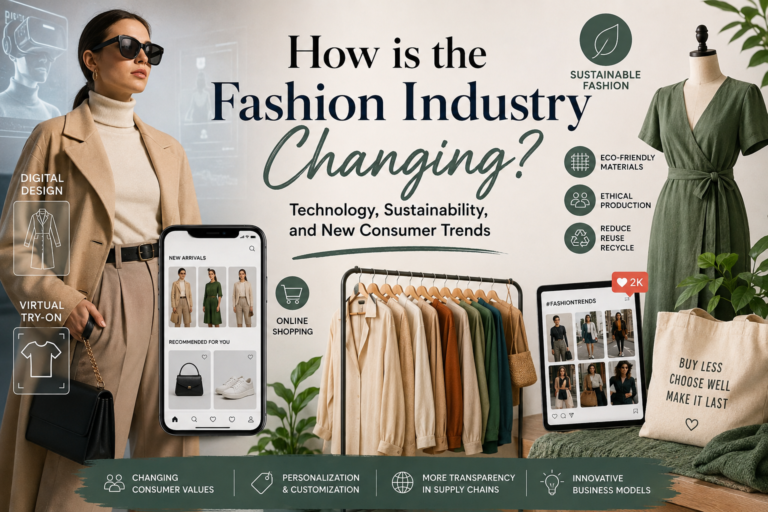
Designers can use digital means to create different shapes and materials virtually before actually manufacturing something. The way online shopping has altered the discovery of clothes is a change from the previous time, while recommendation algorithms can alter the choices made by consumers.
Fashion in virtual reality, digital fashion, artificial intelligence, and new manufacturing techniques have also been introduced.
Some questions arise because of these changes: Can virtual clothes become part of the online identity of someone? Can technology assist in reducing waste in the fashion world? What will be the role of artificial intelligence in fashion design?
Whatever the answer may be, it is clear that technology has entered the process of fashion creation.
It does not mean that everyone should stop buying new fashion. It means only that consumers should think about the frequency of their purchases, the duration of wear of purchased items, and their compatibility with existing wardrobes.
Fashion is creative, and it is not necessarily disposable.
Reasons Why People Adopt Fashion Trends
People have numerous motives to adopt trends.
For some people, fashion is a form of art. Other people find clothing a way of being part of a certain group. While some people enjoy experimenting with aesthetics, others find joy in inventing new styles of old clothes.
The social aspect also plays its role. People tend to feel closer to a certain social environment if they wear something trendy.
However, being trendy does not mean one needs to follow the fashion trends blindly. Being fashionable does not necessarily mean wearing something trendy. In fact, confidence, styling, and comfortable clothes are no less important.
The most exciting wardrobes are always a blend of both trendy and personal.
How to Stay on Top of Trends and Not Sacrifice Personal Style
The simplest approach to playing with fashion is to start small.
Rather than completely renewing your wardrobe, add one new thing into it. It can be an alternative shape, accessory, texture, color, or styling technique.
A person that usually wears traditionally fitting pants might try something new by wearing more loosely fitted trousers. A person who likes wearing simple clothes can spice up his look with an interesting handbag or shoes.
This approach puts personal style first.
It will also help you evaluate new styles objectively. If a certain style looks and feels good, you can incorporate it into your wardrobe. If it does not feel good, there is no need to wear it.
Fashion is about self-expression.
Brand Responses to New Trends
Fashion brands watch very closely for shifts in the behavior of their consumers.
They review data on sales, social media conversations, search activities, consumer comments, fashion shows, and general culture shifts. All this helps them assess what colors, styles, fabrics, and product categories might become popular.
But successful fashion brands cannot merely imitate all new trends. They also must have an established identity.
Some successful brands manage to combine consistency and novelty. They maintain familiar features but include new details to create fashionable collections.
Such a combination can be the reason why certain fashion houses last for decades.
The Future of Fashion Trends
The future of fashion trends will be even more diverse than before.
Instead of being dominated by one trend throughout an entire season, people will be able to engage in numerous aesthetics at once. This process is currently made possible through online communities.
In addition, technology is likely to facilitate further division into numerous micro-trends. One will be able to find something unique to wear from all corners of the globe.
Finally, sustainability is likely to lead to more thoughtfulness in purchasing decisions and greater appreciation of quality and timeless pieces of clothing.
Frequently Asked Questions
What makes something a fashion trend?
A fashion trend develops when a particular style, color, silhouette, material, or styling method gains noticeable popularity among a group of consumers. Trends can be influenced by designers, celebrities, social media, culture, entertainment, and street style.
How long does a fashion trend last?
There is no fixed lifespan. Some trends remain popular for only a few months, while others influence fashion for several years. Certain styles can also return after disappearing for decades.
Can I be fashionable without following trends?
Yes. Personal style does not require following every popular look. People can create fashionable outfits by understanding proportions, colors, textures, and styling while choosing clothing that reflects their personality.
Who influences fashion trends?
Influence comes from many sources, including designers, fashion houses, celebrities, musicians, social media creators, retailers, street-style communities, and consumers themselves.
Why do old fashion trends come back?
Older trends can return because designers and consumers rediscover historical styles. Nostalgia, vintage culture, entertainment, and changing interpretations of previous decades can all contribute to their revival.
Conclusion
All in all, what is trends in fashion? It does not necessarily have anything to do with clothing per se. Trends are the result of new ideas, the influence of culture, technological progress, innovation, and communication through clothing. A trend can originate at a fashion show, in a street, on the Internet, or within the confines of an artists’ community to reach a global audience. It is easier to get familiar with the process described above in order to better understand fashion as an interesting social phenomenon.
It is important not to follow the latest fashion trends blindly but rather figure out which items of clothing are right for you in terms of style and personality. Fashion never stops evolving, which is why it fascinates us. Trends will come and go, while personal style will last forever.