What Are the 4 Fashion Capitals, and Why They Matter in Global Style
What are the 4 fashion capitals? Fashion has not just been limited to the clothing itself. The fashion is a mirror of the cultural and historical background of the society, the level of its creativity, and the changing personality of the society as well. Certain cities, which are frequented by designers, models, editors, and buyers, become fashion capitals. The streets of such cities become capable of affecting people wearing clothes thousands of miles away and influencing their fashion trends. Knowing what the 4 fashion capitals are becomes a necessity, as it explains why the names of these particular cities have gained so much importance in fashion weeks, designer events, and the international fashion industry.
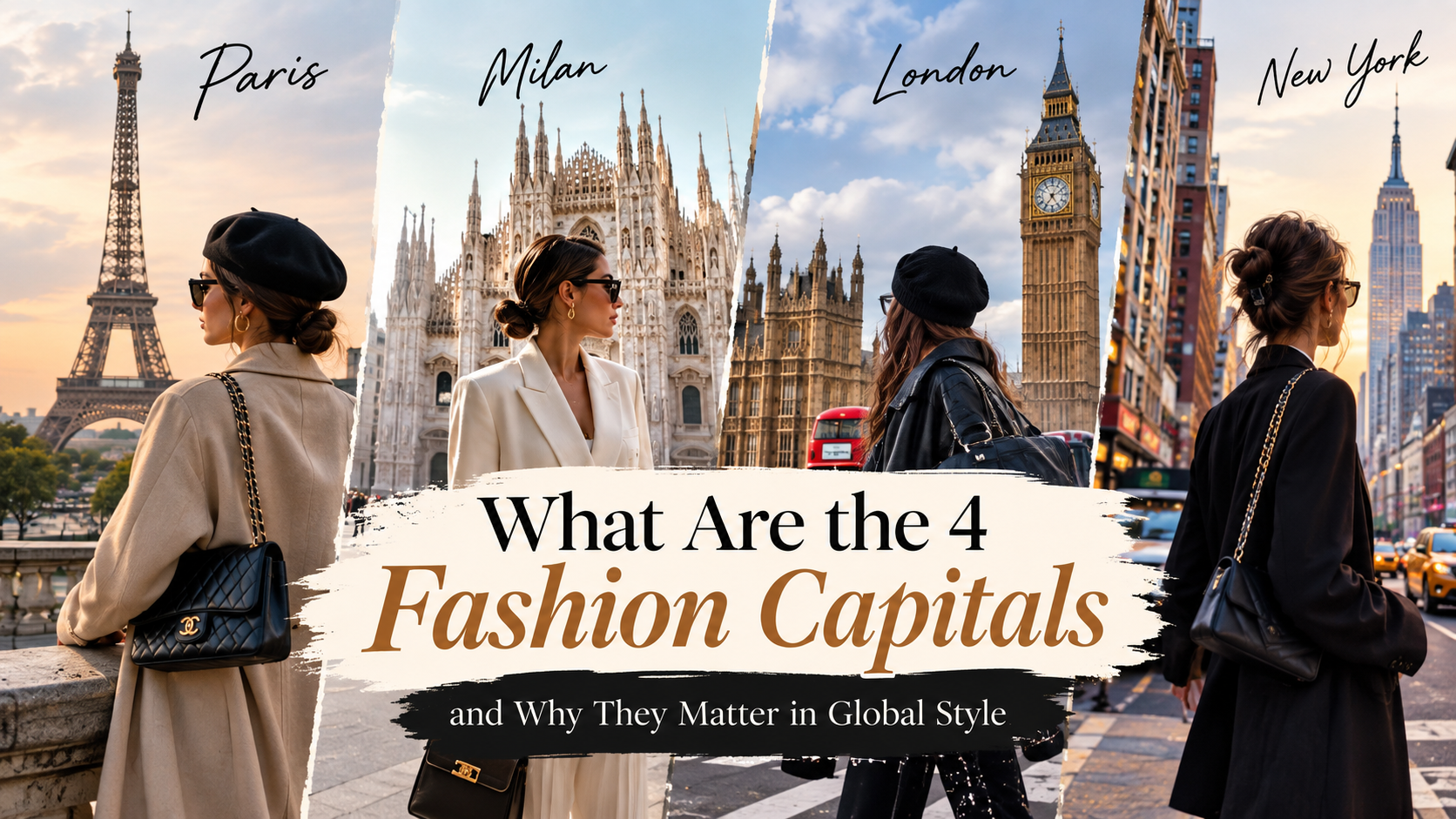
Think of walking in four different cities during the fashion week. Paris has elegant tailoring alongside the innovative couture. Milan is the city of polished luxury, while London brings creativity and unexpected combinations. New York has its confident and pragmatic look. Four different cities do not have the same language of fashion, but they have contributed something unique. These four cities together had created an incredible fashion network that influenced people from all over the world.
Development of Fashion Capitals into Global Fashion Hubs
A concept of a fashion capital appeared over a period of decades and was shaped by arts trends, economic development, craftsmanship, fashion designers, fashion publishing, retail, and cultural exchange. A city becomes influential if it provides favorable conditions to transform a creative fashion idea of one person into a global industry.
There are some features typical of fashion capitals. Designers, photographers, models, journalists, buyers, stylists, and fashion students visit them. There are luxury fashion houses, independent brands, textile businesses, department stores, showrooms, museums, and fashion media in fashion capitals.
Moreover, history plays its role in the development of fashion influence in a city. If a city has been fostering fashion for many generations, it has accumulated a lot of experience that may be transmitted from one generation to another. It involves tailoring methods, textile making, design, and other aspects of the fashion industry.
Nevertheless, fashion influence cannot be reduced to traditions. Nowadays fashion capitals are very dependent on digital media. It allows for spreading collections presented in one city to millions of people instantly. An item worn on a catwalk becomes a topic of discussion all over the world within a few hours.
Paris: City of Haute Couture and Timeless Elegance
Many people associate Paris with elegance and luxury. Being one of the main centers where modern fashion was formed, Paris became one of the most recognizable places associated with the industry.
Walking around Paris in fashion season is comparable to traveling through time. There are a lot of historical buildings, but there are also contemporary silhouettes offered by designers challenging traditional approaches to clothes. That is how Paris managed to remain culturally relevant.
Paris has a strong connection with haute couture—a type of fashion that is characterized by impeccable crafting and individually made clothing pieces. The production of couture takes time and effort; it implies patience and perfect construction skills.
There are also famous fashion houses located in Paris whose work helped form international perception of French fashion. Tailoring, silhouettes, elegant accessories, and details are usually what is associated with Parisian fashion.
Reasons for the Fashion Influence of Paris
Paris takes advantage of its heritage and skills in the field of craftsmanship, art, architecture, and luxury. Its associations with museums and arts create an atmosphere where designers get inspired by various styles and eras.
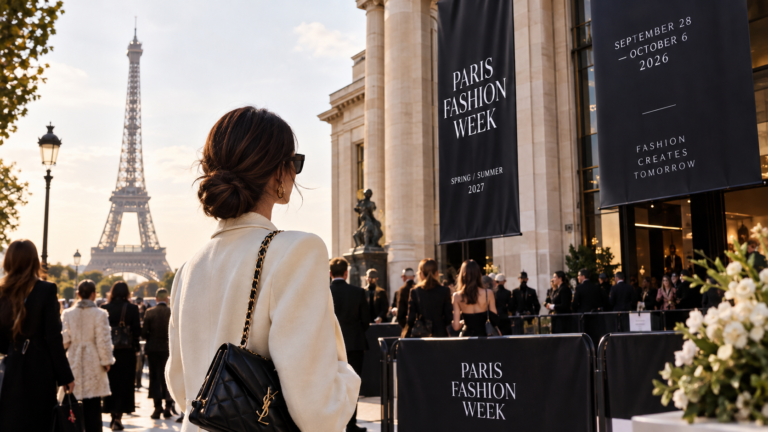
Paris Fashion Week is a popular event that involves designers, celebrities, editors, buyers, photographers, and all fashion people who can affect future trends through collections shown at this event.
French fashion is also an example of how fashion items can speak about sophistication without too many decorative elements.
Milan: A Place Where Luxury Meets Italian Craftsmanship
Milan has a different fashion identity. Paris, being associated with couture and romance, Milan is known for luxury, craftsmanship, tailoring, and business.
The city has become one of the centers for the development of Italian fashion brands and luxury labels. Design in Italy frequently gives much importance to quality, structure, fit, and elegant finishing.
Think about entering the boutique in Milan and trying a well-made jacket there. The beauty of it may not be in some unique silhouette. It can be seen in the fabric, details, proportions, and perfect fit. This kind of attention to details is a part of Italian fashion culture.
Milan is also associated with men’s clothing and tailoring. Structured suits, jackets, leather pieces, and accessories contributed to this image of the city.
Modern Luxury and Its Milanese Roots
The power of Milan is partly due to the connection between creativity and commerce. Not only is fashion considered an artistic discipline, but it is a commercial industry as well.
Milan Fashion Week is an international showcase where fashion houses and up-and-coming designers show their latest collections. It is important to observe their collections since it has an impact on consumer trends and retail choices.
There is also an important connection between fashion and manufacturing in Italy. They have developed expertise in many areas, including textiles, leather, footwear, and garment manufacturing. This knowledge helps designers achieve creativity and quality construction.
Thus, the influence of Milan goes beyond the catwalk. This approach is reflected in luxury shops, workwear, accessories, footwear, and high-end everyday apparel.
London: The City of Creative Rebellion
London brings another personality to the global fashion conversation. Its fashion culture has long been associated with experimentation, youth culture, music, street style, and unconventional design.
London does not always follow traditional fashion rules. Instead, designers and young creatives frequently question them.
This spirit has helped London become an important platform for emerging talent. Contributing to the creative atmosphere in which various cultural influences come together are fashion students, individual designers, stylists, musicians, and artists.
When walking through London, one can observe the coexistence of traditional tailoring and punk clothing, minimalist clothes and edgy streetwear, and vintage and contemporary accessories.
Why London’s Fashion Culture Is Special
London’s fashion reputation has been built on innovation. Traditionally, London has allowed subcultures to impact fashion trends.
Another factor in the development of fashion identity has been music. The different music genres have had impacts on hairstyles, silhouettes, accessories, and approach towards dressing. The youth subculture becomes the platform where ideas emerge and later become used by the fashion market.
Finally, London has its fashion education system that allows future fashion designers to acquire skills and create. The fashion schools become the place of interaction of various personalities, hence generating some innovative ideas.
In sum, the industry is focused on a personal approach. Instead of forcing everyone to dress in the same way, London fashion allows developing one’s own style.
New York: Fashion With Modern Energy
The speed, diversity, practicality, and commerciality of New York contribute to the world of fashion. The city is among the largest cultural and business centers of America and unites fashion with entertainment, media, commerce, and life.
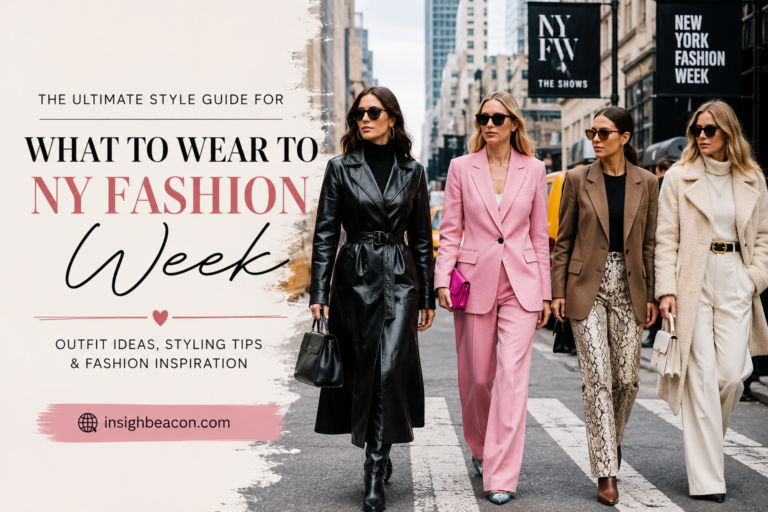
Fashion week in New York has become a significant event in the world of fashion. Fashion designers take the city as a platform for showcasing their collections, which are sometimes related to modern lifestyle.
While fashion cultures based on the elegance of dressing usually do not combine sophistication with practicality, New York fashion does it quite easily. One may wear tailored clothes along with sneakers, casual clothes with luxurious accessories, or even classical clothes with streetwear.
Another important factor that influences the fashion in New York is diversity. Diverse people of various ethnic backgrounds contribute to fashion through their culture, colors, silhouettes, and styles.
What are the 4 Fashion Capitals—How Are They Different?
It becomes clear what the 4 fashion capitals are and how they differ from one another rather than considering them as just similar fashion hubs.
Paris has an image that is tightly connected with luxury fashion, high-quality craftsmanship, elegance, and artistic refinement.
Milan is the city that is famous for its luxury, tailoring, high-quality materials, and production skills. Milanese fashion has a tendency to merge creativity with commerce.
London is a city of fashion experimentation, youth culture, individualism, and unusual design. It has offered chances for the emergence of new fashion trends and fashion designers many times.
New York is the place that is characterized by diversity, modernity, business, and entertainment. Its fashion atmosphere is very much connected with the dynamics of the city.
That is the exact feature that makes these cities so fascinating—they do not compete on creating the same fashion but add something of their own to the industry.
Influence of Fashion Weeks on Global Trends
Why are fashion weeks so relevant? They generate moments of focus. Designers present their collections, but journalists, buyers, stylists, influencers, and photographers provide interpretations of what is seen by them.
Not all trends become popular once they are shown at the fashion week. It usually involves more steps, such as discussion by editors, usage by stylists, wearing of celebrities’ clothes, modification by retailers, and finally consumers’ exposure to the trends.
Nowadays, this process is significantly speeded up by social media. Previously, fashion news used to take more time reaching international markets. Currently, pictures and videos from a fashion show may appear instantly in front of an audience.
Social media has also changed the participants of the dialogue in the fashion industry. Now ordinary customers can give opinions about fashion shows, copy looks, and create trends themselves.
Are They Still the Fashion Capitals Today?
They are still powerful, although the fashion industry is increasingly global today.
Seoul, Tokyo, Copenhagen, Dubai, Los Angeles, Shanghai, and other cities have their distinct fashion identities. Additionally, technological progress has minimized the geographical limitations of the fashion industry—designers from all around the world can communicate with an international audience through digital platforms.
It does not imply that there is no place for the fashion capitals any longer—they have simply integrated into the fashion industry.
The fashion designer might study in London, manufacture clothes in Italy, showcase his collection in Paris, cooperate with the photographer from Korea, and sell the goods to consumers in many countries.
The Impact of Social Media on Fashion Influencers
Instagram, TikTok, YouTube, Pinterest, and other social media channels have altered the dynamic between fashion industry professionals and their audience.
Before social media, people primarily relied on fashion magazines and fashion shows to learn about the latest collections. In today’s world, however, an outfit shot on the street is often given much more attention than a well-thought-out marketing campaign.
handmade,
As such, streetwear has become an essential element of fashion culture. Participants of fashion weeks are photographed outdoors, adding another layer to the fashion stories apart from the official collections.
In addition to that, social media has turned personal style into a powerful tool for influencing others. Consumers are not waiting for designers to dictate to them how to dress anymore. They are using various vintage, affordable, expensive, hand-made and ethnic clothes to create unique looks.
The Future of Global Fashion Capitals
The future of fashion will likely be less centralized compared to past decades. Technology makes it possible for designers to work together on an international scale without necessarily being in the same city physically.
There is also sustainability that will bring more changes in fashion. Both designers and the consumers have started paying more attention to material, process, waste, durability, and sustainable consumption.
However, there is also cultural diversity becoming more apparent. Fashion ideas can spring from local communities and become international fashion trends without necessarily going through the usual fashion system.
There might also be some other changes, including artificial intelligence, virtual fashion, digital fashion showrooms, and manufacturing technologies.
However, physical cities will remain relevant because fashion is intrinsically linked to people and culture.
Frequently Asked Questions
Why are Paris, Milan, London, and New York important to fashion?
These cities have developed powerful fashion industries through a combination of history, designers, fashion weeks, craftsmanship, media, retail, education, and cultural influence.
Which city is associated with haute couture?
Paris is particularly associated with haute couture and has a long history of luxury fashion and highly specialized craftsmanship.
Why is Milan famous for fashion?
Milan is known for Italian luxury, tailoring, textiles, leather goods, footwear, and strong connections between fashion creativity and manufacturing.
What makes London different from other fashion cities?
London is particularly recognized for experimentation, individuality, youth culture, creative subcultures, and opportunities for emerging designers.
Does New York influence everyday fashion?
Yes. New York’s diverse population, entertainment industry, retail environment, street style, and business culture contribute strongly to contemporary everyday fashion.
Conclusion
Discovering what are the 4 fashion capitals are indicates that fashion impact is not solely a result of clothes. Paris provides couture and heritage, while Milan stresses craftsmanship and luxury. London adds an experimental spirit and personality, while New York unites fashion and diversity, fashion and business, fashion and entertainment, and fashion and modern urban lifestyle. All cities shaped their own identities throughout history and their own creativity.
Today, the fashion world is becoming increasingly globalized, and new creative fashion centers appear. Nevertheless, these four cities still play a key role in comprehending the global fashion world. Their main achievement is the recognition of fashion language’s plurality. It is not just designers who make a city significant, but the culture, people, ideas, and creativity of the fashion world of the city.