What Are Health Homes and How Do They Support Better Care?
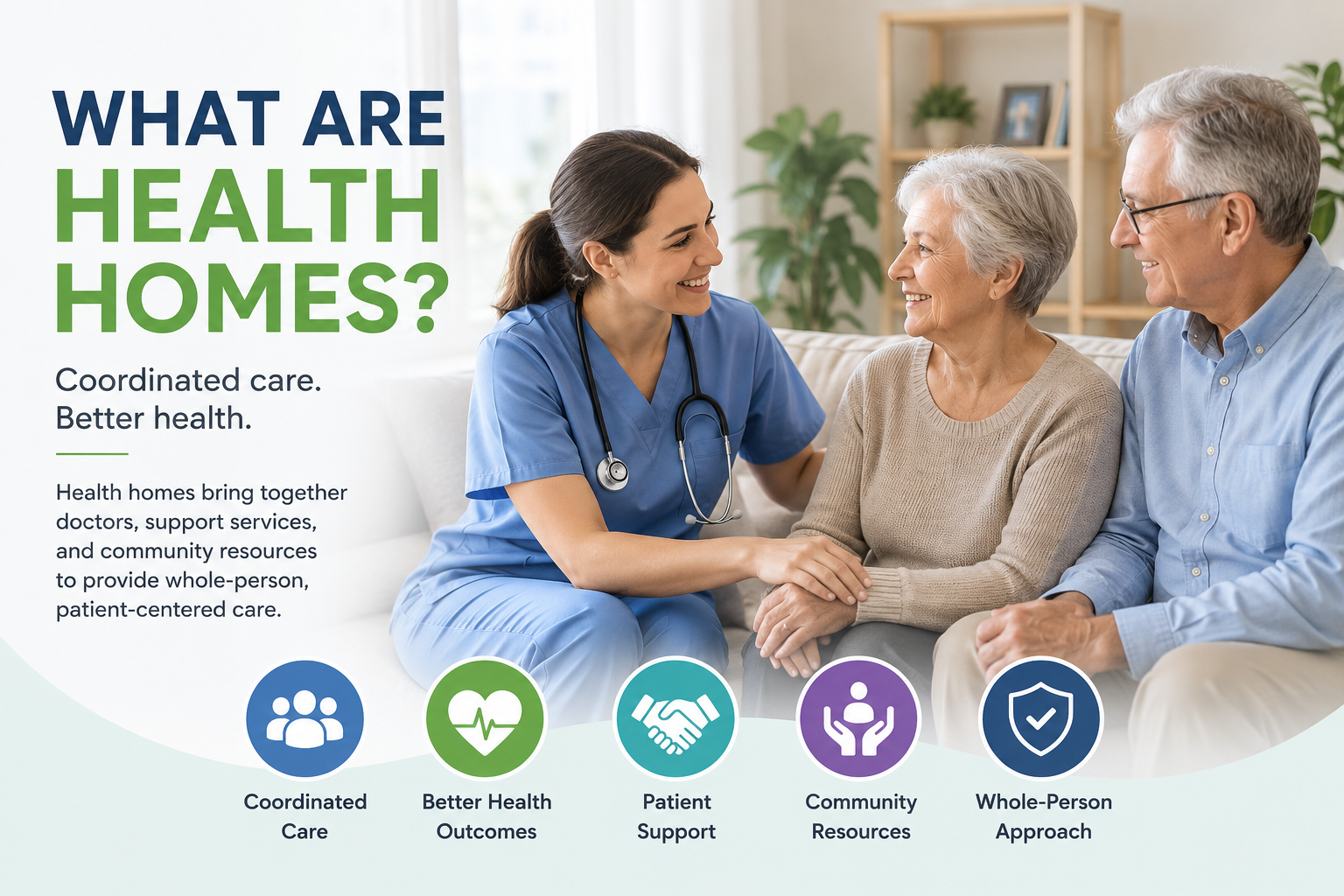
What are health homes? Healthcare is usually visualized as a doctor’s office, hospital, or pharmacy operating independently from one another. However, many individuals require more than just consultations and medication. These individuals need assistance in coordinating various services, medications, appointments, and their health in general. Health homes provide coordination and are supposed to coordinate all these parts into one.
For example, consider an individual called Sarah who regularly consults her primary care physician, specialist, and therapist and goes to a pharmacy. Managing all of these appointments and services can easily become difficult and overwhelming for an individual.
Understanding the Health Home Concept
A health home is not essentially a place of residence or a clinic. Rather, it refers to a kind of coordinated system of health care services based on a person’s needs.
The core of this concept is very simple—there has to be a sense of integration in health care. In order to organize the whole process of care, communication between various participants of the process must take place.
The necessity of such coordination is especially important when dealing with people who have complicated health issues and whose care requires much organization. A person with chronic diseases will have a lot of doctors’ visits, medications, lab tests, and specialists.
Health Home is intended to become a place of integration for all these things. It may include general practitioners, nurses, care managers, behavioral health specialists, and many others.
How Health Homes Work
The easiest way to think about the model would be to consider a healthcare journey.
Let’s assume that Sarah has diabetes and another chronic disease. She goes to her primary healthcare provider but also sees a specialist. She takes several medications and sometimes requires transportation.
Without a coordinated approach, Sarah would need to keep repeating her story and remember all of the appointments by herself. Information might be kept separate from one provider to another.
A coordinated health home model might provide some help with this problem. The care team might assess the needs of Sarah, coordinate communication between her providers, organize appointments, and link her with relevant community services.
It should be noted that the idea is not to replace doctors and specialists.
Key Features of a Health Home
Although programs can differ depending on location and healthcare system, several features commonly appear in coordinated health home models.
Comprehensive Care Management
Care management consists of assessing the healthcare requirements of a patient as a whole rather than as one specific visit or health issue.
In some cases, care management includes helping to develop a care plan, scheduling appointments, tracking progress, and communicating important information between providers.
Care Coordination
Care coordination is an important component. The patient might be in contact with many different providers, and each provider may have his or her own part of the whole picture.
Coordinating communication will decrease any possible confusion and will allow providers to understand what the rest of the care team is doing.
Patient-Centered Care
The patient remains the center of the whole process. The care provided must take into account the personal goals, preferences, situations, and needs of the person.
For example, patients with the same health issues may need entirely different forms of assistance. One patient may need transportation to appointments; another may need help with appointments or social services.
Connection to Community Services
Health is not dependent only upon healthcare. Transport, stable living, access to nutritious food, education, work and social services may impact an individual’s capability to maintain their health. These wider conditions sit behind many public health problems.
The Health Homes Initiative may help to provide the eligible individual with assistance from community organizations that can address these needs.
Continuous Communication
Healthcare is not usually a one-time affair. It could take months or even years.
Constant communication may help the care team understand changes, implement treatment plans, and react to any emerging issues.
Who Will Be Benefited by Health Homes?
Health homes are basically created for those who suffer from complex health issues and will gain from additional coordination.
Such people may be those with chronic illnesses, frequent users of healthcare facilities or patients requiring assistance to coordinate their medical and behavioral care along with community services.
Let us take another example. James needs to attend many medical appointments in a month. At times, he forgets to show up for his follow-up appointments and does not know which doctor to share his lab reports with. Such coordination and organization can be done through health homes.
Role of the Care Team
A health home usually depends on teamwork rather than one individual doing everything.
The care team includes either one or many professionals, including a primary care provider, nurse, care coordinator, behavioral health professional, pharmacist, social worker, or community support professional. This team will depend on the program and individual needs of the patient.
Every team member will have his or her own point of view on the problem.
For instance, the pharmacist can identify issues associated with medications, the social worker can assist the patient to find community assistance, etc.
Effective communication among them can ensure better service to the patients.
Health Homes and Chronic Illnesses
Dealing with a chronic illness can be difficult in that treatment goes beyond a routine visit to a physician.
It may involve continuous monitoring, taking of medications, lifestyle adjustments, testing, consultations with specialists, and more. If these processes are conducted independently, it may make the patient feel overburdened.
Health home initiatives can offer a platform in which these processes are coordinated.
This is where an individual with a chronic illness will have his/her own care plan specifying healthcare objectives, scheduled visits, medications, and more support services.
The intention is not to create many appointments unnecessarily. Instead, coordination aims to make existing healthcare more organized and meaningful.
Behavioral Health and Integrated Support
Physical and behavioral health are often closely connected. Stress, emotional difficulties, and other behavioral health issues may influence how patients cope with their existing health problems. Both physical and behavioral wellbeing are part of the components of health that care has to cover together.
That is why a number of health homes pay much attention to coordination between physical health care and behavioral health services.
A patient can receive his/her treatment from one provider, while another specialist will give him/her behavioral health support. Such an approach may be especially beneficial in case a patient requires assistance in many fields of health care.
Health Home Benefits
The benefits of coordinated care could benefit patients, providers, and healthcare institutions.
Organization
Patients would have a better grasp of their health plans, schedules, and other services.
Communication
Providers can share information and strive towards mutual goals rather than working separately.
Personalized Care
The development of care plans can be done according to individuality rather than following the generic care plan only.
Improved Access to Services
Patients will be helped in linking themselves with the necessary medical, behavioral, and community services.
Improved Follow-Up
Effective follow-up and communication will lead to the detection of problems at an early stage.
Improvement in Patient Engagement
With patient understanding of care plans, they will engage themselves in making decisions regarding healthcare services.
What Health Homes Do Not Mean
The term can sometimes create confusion.
Health Home does not mean that patients will go live in some designated homes. It does not also imply that all services related to healthcare occur at one place.
The term “health home” rather refers to coordination.
Physically, doctors, specialists, pharmacies, and other community centers providing healthcare services will continue to be in separate places. The only thing that will change is the coordination among them.
This is significant because coordination among such places can take place with the help of communication systems.
Technology in Health Home Models
Modern technology can facilitate coordination.
The use of electronic medical records can make it possible for licensed health care providers to access pertinent information. Communication systems can aid in effective communication between the care team members. Appointment reminders and other technological devices can help the patient stay organized. It also helps to understand which technologies count as applications of AI, since some of these tools rely on it.
But technology is not the whole story. No matter how sophisticated the system is, it can never substitute for proper communication and patient participation.
The most effective approach is the one where technology complements an organized care model.
Challenges in Health Home Programs
While there are benefits to using the concept of coordinated care, it can come with challenges.
The first challenge is the exchange of information when there are different systems used by different organizations. It becomes difficult for coordination when information is not being exchanged easily between the providers.
A second challenge is patient participation. Some patients find it hard to go to scheduled appointments, understand healthcare instructions, and communicate with the healthcare team.
The health care team itself can be faced with issues of limited resources, such as people and time, among others.
Privacy of health information also needs to be considered in coordination because it needs to be handled properly.
It does not take away the usefulness of the concept, though.
Improving the Patient Experience Through Health Homes
The system of healthcare is often a confusing process. The patient gets one piece of information from one professional and another from another, trying to make sense of the entire process.
Coordinated care can solve the confusion for the patient.
Instead of placing the burden of organizing care on the patient, the care team can assist in coordinating it all.
This could involve helping Sarah understand her appointments, the purpose of the medication, and whom she should call with any queries.
Small improvements in organization can make healthcare feel considerably less overwhelming.
Health Homes and Prevention
Coordinated care can be used for preventative healthcare as well.
Preventive care is all about detecting issues early and ensuring that the individual gets their screenings, check-ups, vaccinations, etc.
A coordinated care team might have a better view of the overall situation and thus be able to spot any missed appointments or required preventative procedures.
Prevention doesn’t mean that health issues won’t appear at all; it just provides more chances to deal with some risks early.
The Need for Coordination in Contemporary Health Care
Modern health care is becoming more specialized. Specialists can offer good knowledge, yet specialization could make the process seem disconnected due to lack of communication.
The patient has to switch from general practitioner to specialist to behavioral care to pharmacy to hospital to community organizations.
The more organizations are used, the greater the need for coordination becomes.
Health homes try to address the situation through using a team-based approach. The goal is to integrate the services already present so the patient doesn’t have to coordinate everything himself.
Things to Think About When Selecting a Health Home Program
In the event that one is qualified for a health home program, it is advisable to know how that particular health home program works.
Some questions to pose include
- Who coordinates my care?
- Which healthcare professionals participate?
- How will providers communicate?
- What services are included?
- Can the program connect me with community resources?
- How would I have my care plan changed?
- To whom should I turn when I need information?
These questions may help patients learn about their possible assistance.
Different programs can vary, and therefore, people can be eligible for different care programs and assistance services.
The Future of Coordinated Healthcare
The larger healthcare field is showing growing interest in models that integrate medical services with behavioral health and community services.
This is due to simple necessity. Patients do not have their health problems occurring in separate compartments; there could be medical, emotional, activity-related, family, or resource issues at stake.
Coordinated models are sensitive to this fact.
With advancements in healthcare technology, there could be more methods of communicating and monitoring and tailoring plans for individual patients. Yet, the essential element is the human one—healthcare professionals must look beyond the compartment.
FAQs About Health Homes
1. What are health homes?
They are coordinated healthcare models designed to connect different services around the needs of eligible patients. Rather than treating each healthcare interaction separately, the approach encourages providers and support professionals to work together.
2. Are health homes actual residential homes?
No. Despite the name, a health home generally refers to a healthcare coordination model rather than a place where patients live. Services can involve multiple healthcare locations and professionals.
3. Who typically benefits from health home services?
People with complex or ongoing healthcare needs may benefit most, particularly those who need support coordinating multiple providers, treatments, or community services.
4. Can health homes include behavioral health services?
Yes. Depending on the program, behavioral health may be incorporated into the coordinated care approach, allowing physical and behavioral healthcare professionals to communicate more effectively.
5. Do all health home programs provide the same services?
No. Programs can differ according to their healthcare system, location, eligibility rules, and available resources. Patients should check the specific program for accurate information.
Concluding Remarks
Gaining insight into what are health homes becomes possible when one considers healthcare as a process that is interconnected rather than as a series of isolated encounters. The approach revolves around coordination, communication, personalized care planning, and linking individuals to the necessary healthcare, behavioral, and community-based services.
For those with complicated healthcare needs, this approach is helpful in alleviating confusion and making their experience with healthcare more coherent. It does not eliminate doctors or specialists from the process but calls for working together with them. The ability to understand healthcare better and make it more accessible and centered around the needs of an individual becomes possible thanks to effective communication between the patient and his or her support team.