What Is Combo Skin? Understanding Your Skin Type and How to Care for It
Your skin may be quite frustrating when you feel one side of your face greasy in the middle of the day, while the other is either dry, tight, or uncomfortable. You will find yourself going back and forth between the oily and dry skin care products and still not getting the desired results. The knowledge of what is combo skin will allow you to make sense of this situation.
Combo skin is very common among many people, but it is not all the same. There is a case where someone may have a very oily T-zone with just slightly dry cheeks, while there is another where someone has dry skin along with some spots occasionally appearing.
What Is Combination Skin Type?
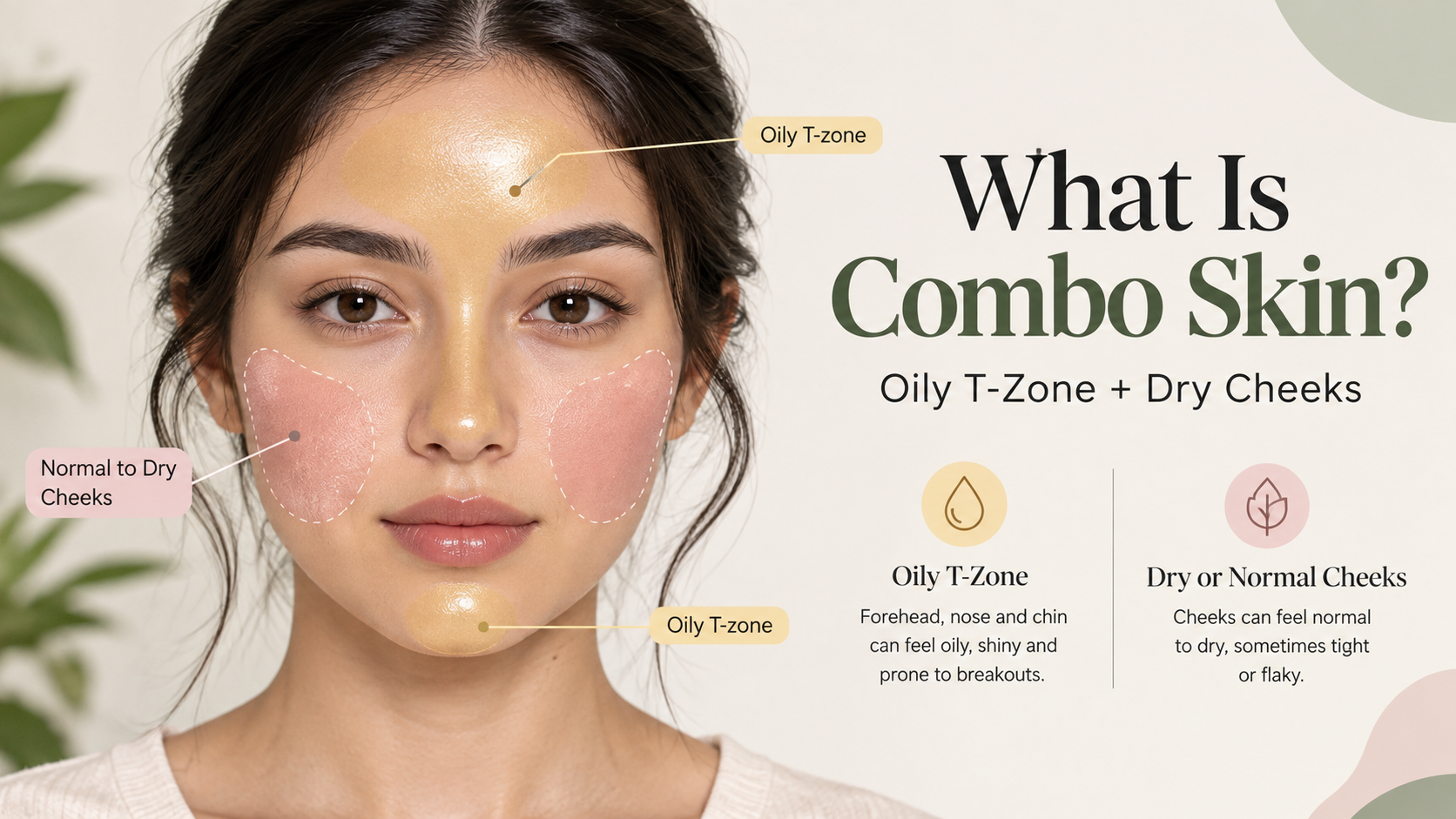
A combination skin type is a term used to refer to skin whose different parts have different features. Most often, the forehead, nose, and chin areas that are collectively known as the T zone areas have excess sebum production, whereas the cheeks and the lip area may be oily, normal, or even dry.
The distinction lies in the amount of sebum produced by the different parts of the skin. Sebum is an oil that the body produces in order to provide some protection to the skin. When too much of it is produced, it leads to the skin having shine and clogged pores. On the other hand, parts of the skin that produce little sebum tend to feel dry.
Having a combination skin type is not necessarily a condition; it is simply a description of the skin type. Having combination skin tends to make skincare quite hard since what works for one part of the skin may not work for the other part of the skin.
Your skin might also change with time depending on factors like weather, hormones, age, stress, medicines, cosmetic products, and environmental factors. Your skin type is, therefore, never really fixed.
Common Indicators of Combination Skin
To spot combination skin, one should compare various facial zones rather than paying attention to one symptom in particular.
One of the first indicators is shine on the forehead and nose. Oiliness becomes visible some time after cleansing, especially at the T-zone area. Pores can also be large because of excess oil and dead cells in these regions.
Meanwhile, the cheeks may feel comfortable, dry, or tight. Some people will get flaky areas around their mouths or sides of noses, while others have comfortable cheeks with an oily middle section of their faces.
Acne can also be present for combination skin. It is more likely that the oilier areas might get blackheads, whiteheads, or even pimples, while the drier areas would be more susceptible to irritation by certain products.
It is critical to recognize that having one or more of the above symptoms would not necessarily imply that your skin type is decided. Your skin behavior can be affected by a number of issues, such as your timetable, climate, skincare routine, and pores and skin care products that you use.
What is Combo Skin?
Knowing what combo skin type means becomes much clearer if you take into account what causes the formation of such a skin type.
Genetics may be one of the determining factors. People have different amounts of sebum in their skin in particular facial areas compared to other people. Hormone changes may lead to the change in sebum production, especially in particular periods in people’s lives.
External factors can have an impact on your skin. The hot and humid climate may cause additional sweating and the appearance of oil on the skin. On the other hand, the cold climate may cause tightness or dehydration of some parts of your skin. Air conditioning or heating can also have an effect.
Your skincare regimen is crucial too. Use of any very drying products, including cleansers, over-exfoliation, or anything of this sort, can cause problems for the skin barrier function. This results in the feeling of tightness or discomfort even when some areas of the skin are oily.
Oily Skin and Combination Skin
Both oily and combination skin types share some common features but are not quite alike. In case of oily skin, extra oil usually occurs on most parts of the face. In combination skin, extra oil occurs only in specific spots.
This becomes especially important for the choice of skincare products. A person with oily skin can easily use light skincare products for the whole face, while those with combination skin should probably adapt products for different parts of the face.
How to Test Your Skin Type at Home
You can find out about your skin type from your skin reaction after washing your face.
Begin by cleaning your face with a mild cleanser and do not immediately apply any skin care products. Give your face some time and see how the different areas are reacting.
If your whole face appears to become oily, then your skin might be oily. If the majority of the areas feel tight or dry, then dry skin is likely. In case your T-zone area is oily and the rest of the face looks normal or dry, combination skin could be possible.
Keep in mind that this method of determining is not a professional one and that your skin can react to the conditions of the season, environment, hormonal changes, or recently applied products.
If you have experienced problems such as irritation, redness, significant dryness, pain caused by acne, or any other similar problem, then you must visit a dermatologist.
Steps to Develop Skincare Regimen for Combination Skin
The purpose of creating a skincare routine for combination skin is achieving a balance. You need to ensure that you remove any excess oil but also preserve the areas where there isn’t enough moisture in the skin.
Gentle cleansers serve as a good place to start. Opt for one that gets rid of your sweat, your sunscreen, and other build-ups without making your whole face feel tight. Over-cleansing can only aggravate the dry areas.
Moisturizing after the cleansing process may be helpful for strengthening your skin barrier. You don’t have to apply some thick cream all over your face. Using lighter lotions or gel creams may also suit you well, while your dry areas get some extra moisturization.
Using sunscreen is a good habit that you must continue even now. You can select one that has a broad spectrum and also suits your skin. If you do not like oily and greasy sunscreens, then you may opt for a lighter one.
At night, clean your face and then apply products that will work towards your specific needs. Should you incorporate any active ingredients in your routine, start off slow as opposed to combining multiple powerful products.
Choosing the Right Cleanser
Cleansing is an essential step in maintaining combination skin since the cleansing process should take into account oil without causing a loss of moisture.
Choose cleansing products that are formulated with a non-harsh, gentle cleanse and not with the feeling of squeaky clean skin. Skin that is overly tight right after cleansing may have had too much cleansing done to it.
How often you cleanse also subjects. For many humans, cleaning within the evening is especially useful for eliminating sunscreen, makeup, sweat, and environmental buildup. A gentle morning cleanse or clearly rinsing with water may rely on your pores and skin and personal recurring.
In case of irritation, burning sensation, reddening, and excessive dryness, usage should be stopped, and a product of lesser strength may be selected.
How to Apply Moisturizer to Combination Skin
The moisturizer is still useful when parts of your face are oily. Despite being distinct substances, having an oily skin type does not protect the skin from dehydration.
A light moisturizer will help to give you the moisture content without making your T-zone too oily. Some of the active ingredients in skin care products that help with hydration are glycerin, hyaluronic acid, and ceramides.
Another option would be to use the product in different amounts. If the cheeks look dry and the forehead looks moisturized, a little more product could be applied to the cheeks rather than applying too much everywhere.
Such a system, which is sometimes called targeted skincare, recognizes the fact that different areas of the face need different treatments.
Managing Oil and Shine
Too much shine may be a problem, especially when it keeps coming back soon after cleansing. Yet constantly getting rid of excess oil is probably not the best approach.
On the contrary, go easy on your skin care and avoid washing your face too often. For daytime purposes, blotting sheets will do the job to remove oil without requiring you to wash your face again.
In case of clogged pores and breakouts, salicylic acid might be helpful for certain people. Nevertheless, active ingredients can cause irritations when applied too often; thus, apply them in moderation and according to the instructions on packaging.
Should the pimples be chronic, painful, or result in scars, it is better to search for expert assistance as opposed to trying new OTC products time after time.
Common Skincare Pitfalls to Avoid
One common mistake is assuming that one’s whole face shares the same skincare needs. Using an oil-controlling product all over your face might make dry areas feel uncomfortable, and using a thick moisturizer all over will increase the greasy feeling in the T-zone area.
Another common mistake is frequently switching up your products. Skincare tends to be a consistency-driven process, and constant switching up of products makes it hard to tell what products work for you from those that irritate your skin.
Over-exfoliation is yet another issue. Over-exfoliation may cause problems with the skin barrier and cause the skin to become dry, sensitive, and flushed. Increased exfoliation does not necessarily mean better skin.
In addition, do not assess your skin’s condition based on one moment only. The skin’s appearance alters throughout the day; thus, shininess or dryness is not necessarily a valid excuse to alter your entire routine.
Ingredients that Can Be Added
There is no universal ingredient that would suit all people with combination skin. It is important to choose ingredients depending on one’s needs.
In order to increase hydration, ingredients like glycerin, hyaluronic acid, and ceramides can assist in the process. In case of oily areas of the face and clogged pores, salicylic acid could be beneficial if well-tolerated. Another popular ingredient is niacinamide, which is able to contribute to the evenness of the skin.
In case of sensitive skin, it is important to start by introducing one active ingredient at a time. It is also recommended to conduct a patch test in case it is a new product and if there was any reaction to skincare products before.
Seasonally Adjust Your Routine
The needs of your skin might vary from season to season. You will find that you have more oil and sweat production when the temperature is high or there is humidity.
When the weather gets cold or dry, the same skin may become tighter and dry. Using a thicker moisturizer on dry skin spots and light products on other spots may help in such a case.
The environment indoors can impact your skin too. Dryer air due to heating and air-conditioning can be one way that your skin becomes drier. Do not alter all aspects of your routine for each season; just make a few adjustments where necessary.
How Do You Know to See a Dermatologist?
Being combination skin does not generally warrant any treatment. Nonetheless, some issues might warrant the assistance of a dermatologist.
Consulting a dermatologist is advisable if you are experiencing any of the following symptoms on your skin: continuous breakouts, acne, dryness, irritation, rash, redness, or any other symptom that will not clear up even when taking care of the skin with gentle skincare products.
A dermatologist will have a closer look at your skin and figure out what could be causing your problems—your skin type, another problem, irritating products, or something different.
A dermatologist will be helpful, especially if you use prescribed medication or several active ingredients and don’t know how to combine them.
FAQs
Are combination skin and oily skin the same thing?
No. Oily skin is characterized by increased oil secretion throughout the majority of the face, while combination skin is characterized by oilier spots along with normal or dry areas.
Is combination skin capable of becoming dry?
Yes. Combination skin can be dry, especially in the cheek and mouth area. Weather, excessive cleansing, active ingredients, and even the environment itself could all be the cause of dry skin.
Moisturizer for combination skin?
Certainly! Even oily regions require moisturizing. The drier regions could possibly require more. Lightweight moisturizer will do the job.
How often must one exfoliate combination skin?
It depends on the particular product you choose. Excessive exfoliation will only irritate the skin and dry it out, so be guided by the product’s recommendations.
Can combination skin alter?
Yes. The condition of your skin may alter depending on age, hormonal factors, weather conditions, medications, and skincare regime, among other aspects.
Conclusion
Knowledge of what is combo skin can be helpful in creating a skincare regimen since it clarifies that different areas of the skin react to the same product differently. Thus, one should not strive to remove all the oil from the face and apply thick creams for dealing with dry skin everywhere on the face.
A good cleanser, the right moisturizer, sun protection, and wisely selected products for treating any problems will provide a strong base to work from. Take note of the condition of your skin, apply the products one by one, and avoid washing and scrubbing your skin excessively. By following everything in the right way, you will be able to create the correct skincare routine for great skin.