
Understanding What Is a Purpose of a Business for Long-Term Success
All her life, Emma wanted to open a small bakery. She thought that success was when one earns enough money to lead a comfortable life, but after opening her store, she found out that customers come back due to trust, quality, and care. She soon understood what is a purpose of a business was all about. Her path is also a simple example of how to work for yourself with a clear purpose.
This story describes the case of many entrepreneurs. Each successful business has its reasons, whether they serve customers, solve some issues, provide people with jobs, or innovate. Money-making is important, yet those businesses that concentrate on creating value have a better reputation and can sustain growth.
Why Purpose Is Crucial to Any Business
Any business begins with an idea. At times, it starts when people identify a niche in the market, but at other times, the idea might be born out of a personal passion or a wish to better people’s lives. Whatever the case, purpose provides any business with a direction.
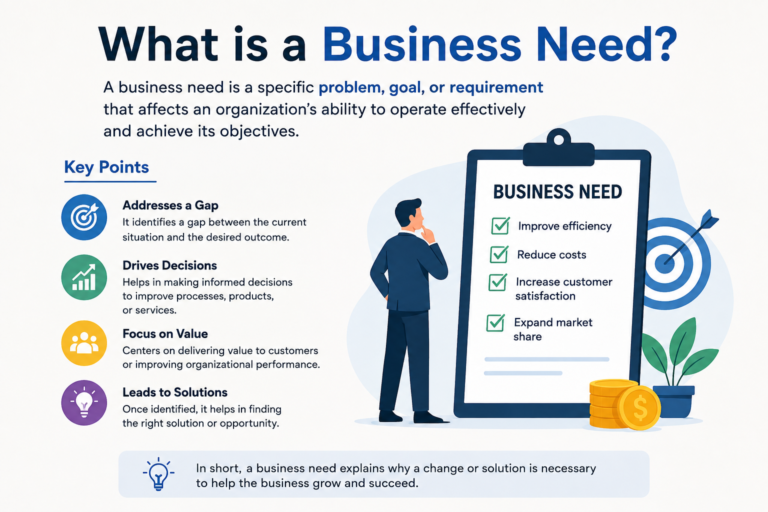
Without purpose, not even a successful business is able to develop loyal clients or motivate its employees. A clear mission will help to make leaders set priorities and develop consistent strategies. Those priorities also decide what a business need is at each stage of growth.
A purposeful mission plays a role in shaping a business’ image. In today’s world, customers are keen on supporting the companies that share the same values. It becomes easier to create an emotional bond with the target audience.
Both a family-owned store and a multinational company are guided by a sense of purpose in order to ensure their sustainable growth. Finances play a huge role, but purposeful missions motivate companies to move beyond finances.
What Is a Purpose of a Business in the Modern Economy
In today’s economy, companies operate in an extremely dynamic environment whereby consumer expectations are constantly changing. Due to technology, competition and global market forces, companies relate differently to consumers.
Nowadays, companies must provide their customers with high-quality services or goods. Environmental issues, ethics, employees’ health, and social responsibility are crucial in achieving success in business.
Businesses that know these changing expectations are usually more flexible. They do not concentrate on generating profits alone but rather look for ways of addressing consumers’ problems and delivering a great customer experience.
Such a different approach fosters innovation. Companies which are ready to grow and constantly improve are ready to adapt to market trends.
Adding Value to the Customer’s Life
Customers are the heart of any successful business venture. The absence of happy clients will make sustainability impossible regardless of the company’s sector and size.
Adding value goes beyond making the products cheap enough. It requires the provision of quality, reliability, convenience, and top-notch services. Companies that provide more value than is expected get repeat customers who refer others to them.
Let us take the example of two coffee shops whose products have almost identical prices. While one shop only serves coffee to the customers, the other one greets you by your name, serves your favourite beverage, and makes you feel at home. Customers are likely to favour the latter because of the added value.
Those organisations that pay attention to customer satisfaction tend to have better reputations, thus making success easier to attain.
Creating Good Relations with Employees
The employees are important in helping to achieve the organisational objectives. Employees who are highly motivated and engaged will help improve productivity and the experience of the customers.
The best companies ensure that they develop their employees by giving them training, recognition, and career development. The recognition makes them be motivated to work toward the organisational objectives.
Good organisational climate motivates people to cooperate with each other. Team members, who have trust in their leaders, come up with creative solutions and ideas.
Good relations between people inside organisations often result in good relations with people outside the organisations.
Innovation and Growth of a Business
Innovation is the most powerful driving force for achieving success in a business in the long term. The market is in a constant state of flux; the needs and expectations of consumers change and advance technologically, but the businesses that welcome innovation stay ahead because they adjust to changes.
The innovation doesn’t necessarily entail inventing something novel. It can be a way of improving customer service or optimising business processes or making use of advanced technology to achieve more efficient problem-solving solutions.
Think about how the local stores made themselves more accessible through websites and electronic money transfer systems. The firms did not stick with conventional approaches alone but tried to keep up with changing patterns among consumers. Such flexibility kept them relevant even amid uncertain economic times.
Those leaders who inspire creativity can find business opportunities that are often missed by others. With such an attitude, businesses can react quickly and improve their services by following what consumers think.
Ethics and Social Responsibility: The Significance of These Terms
Nowadays, consumers pay attention to both the products and values of a company while examining a certain business organisation.
Business organisations that behave in a way that involves fair treatment of employees, protection of customers’ personal data, adherence to environmental norms and supporting local communities manage to generate more trust, which may affect consumers’ decision-making and foster long-term relationships with customers.
Social responsibility of companies today is not considered to be a voluntary activity any more, as many successful companies are engaged in charity, sustainability activities, and community development because these activities benefit both society and the company itself.
Ethical behaviour helps to mitigate risks in the long run, as responsible organisations are usually more likely to meet legal obligations.
Financial Success Makes Possible All Goals
Purpose is not only about profit, but financial security is a must. For companies to succeed, there should be positive cash flow in order to provide funding for development of the workforce, improving products, expanding their business, and serving clients well.
Only when a company is profitable will they be able to employ competent personnel, use new technologies, and keep on working for their clients. Even a firm with a valuable purpose cannot survive without financial stability.
Profitability and purpose go hand-in-hand for successful leaders. Good customer relations, employee happiness, and being ethical frequently have a direct impact on the bottom line.
While money alone is not the answer, it certainly helps in providing the necessary means to accomplish other organisational goals.
Adapting to Changing Markets
The markets seldom stay the same for an extended period of time. Preferences of the consumers, economic changes, and technology constantly influence the business environment.
Companies, which observe what is going on in their industry and pay attention to consumer behaviour, have better chances to adapt successfully. The ability to change enables companies to launch new products or services or see potential opportunities before others do.
Adapting is a constant process of learning as well. Business people, who spend some money on education and conducting market research, usually make better decisions than those who do not.
There was one company I knew which adapted its activities just because of the way it listened to its customers’ suggestions. Small changes eventually led to better customer loyalty, efficiency, and more sales.
Success Metrics that Go Beyond Financial Gains
Financial metrics will always be important to any business; however, financial performance is not the only metric of success. Organisations have been adopting other performance metrics such as customer satisfaction, innovation, the environment, and contributions to the communities.
Measurement of balanced performance offers a more comprehensive view of the performance of an organisation. Organisations that adopt various measures tend to be more informed about their strengths and weaknesses as well as future directions.
Organisational success should also take into consideration the contribution of the business to society. From assisting customers with their problems, offering employment, or giving back to the local communities, success goes beyond financial gains.
Organisations that understand this broader perspective end up having unique competitive advantages. That broader view is a big part of how to make your business successful over time.
FAQ
What role does the purpose of a business play?
The purpose of a business is to offer direction to decisions, ensure that employees maintain focus, build trust with customers and facilitate growth. Purpose also helps organisations establish good reputations even when market conditions change.
Can a business have multiple purposes?
Yes, even though a business entity must have its primary objective, it might have several others. Some of these objectives may include creating employment, developing the community, innovating, protecting the environment, and providing quality customer services.
Profit as the main goal of doing business is the right answer?
Not really, although profit is important as a key factor in maintaining a company’s operations and its growth potential. But there is another aspect of running a successful company, which includes customers’ satisfaction, the wellbeing of employees, ethics and value creation.
Why is the powerful business purpose important for creating loyal customers?
Since customers tend to prefer those companies who provide them with high-quality goods and services, the idea of purpose can be helpful to develop a good relationship with them.
Are there any advantages for small businesses in terms of having a business purpose?
Certainly, since having a clear purpose allows making better decisions, developing a strong brand, motivating employees and competing with other businesses.
Conclusion
The business’s success does not solely depend on its financial performance. Companies that treat their clients well, care about their staff, are innovative and contribute to the society may lay more solid grounds for development. The comprehension of what is a purpose of a business is helps to understand the need for entrepreneurs to think beyond the scope of profits.
When starting a new business or running an existing one, the purpose will guide people during all difficult times. Businesses that stick to their purpose but at the same time adapt to changes in the expectations of their clients will gain their trust and become successful for many years to come.