
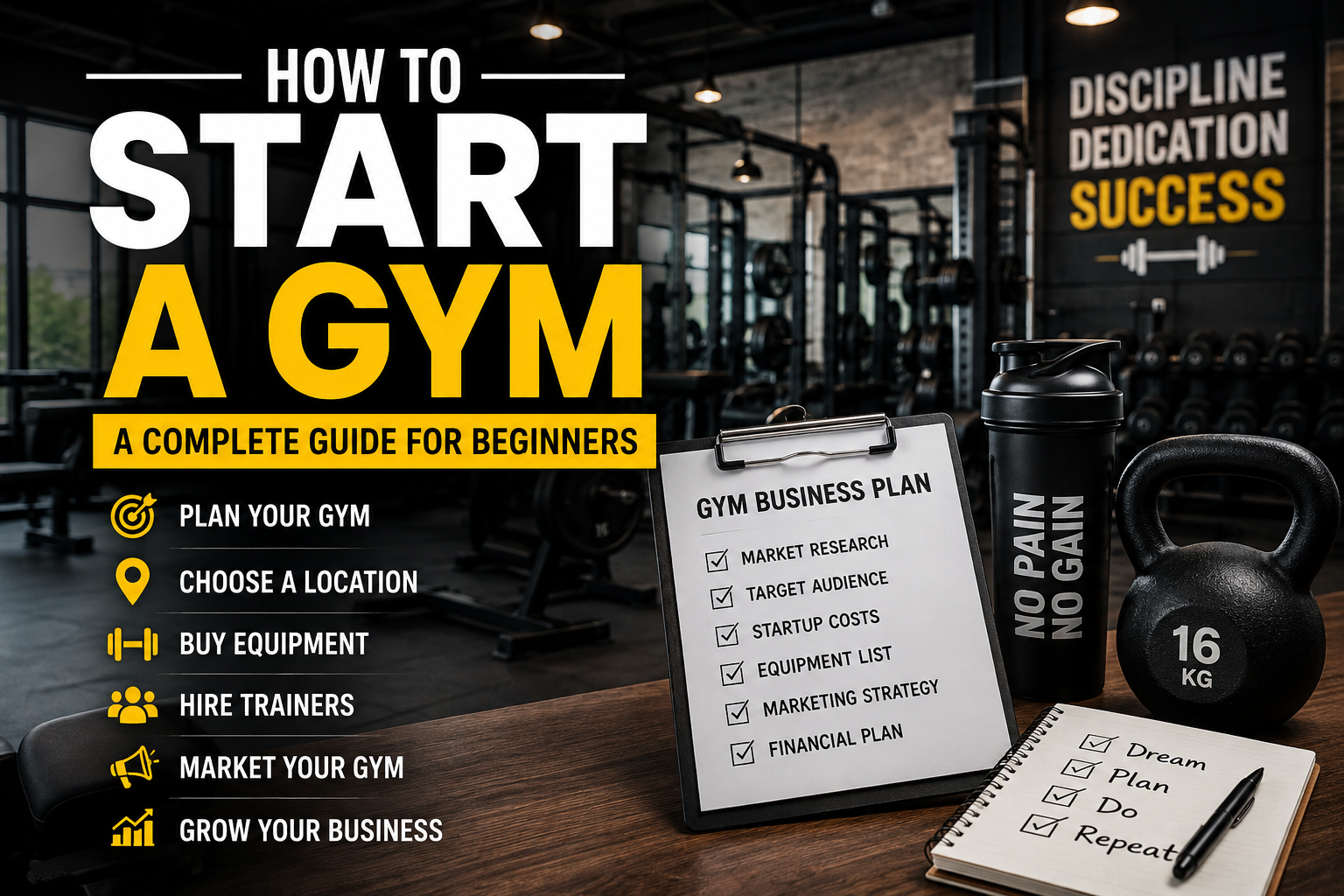
A Practical Guide to How to Start a Gym Business
The fitness industry has turned out to be an area where entrepreneurs would like to develop their businesses based on the principles of health and wellness. Gyms, whether it is small studios or full-service facilities, can cater to people with diverse objectives. While some would come in order to shed some pounds, some may be interested in building their muscle, while others only want an active place to workout. In practice, most members join with one goal in mind: learning how to grow muscles and lose fat.
Nevertheless, running a gym means much more than just equipping a facility with the necessary equipment. The one who is trying to figure out how to start a gym should think of market demand, initial costs, location, equipment, staffing, pricing, marketing, and customer retention among other important considerations. While a concept can lead to a successful fitness experience, good planning will turn a concept into a successful business.
Understanding Your Fitness Business Concept
Before considering how to start a gym a real estate purchase or choosing your equipment, decide the kind of gym you wish to run. There are a variety of fitness concepts, including traditional gyms, studio gyms, personal training gyms, women-only gyms, strength gyms, and other gyms for particular activities like boxing and yoga.
Your concept should be one that caters to a certain need in the market. Being generic is not a good idea, as it can make your gym hard to compete against other gyms. It is better to consider whom you wish to target and what kind of experience you wish to give them over the competition.
For instance, if you wish to cater to beginner customers, then it should include more friendly trainers and easier equipment instruction in groups. In the case of a strength gym, you will have to buy more racks, weightlifting machines, and areas for strength training.
This idea will affect many decisions concerning your location, equipment, membership fees, personnel requirements, and marketing strategy. Coming to this decision early on helps guide the rest of your business plan.
Investigate the Local Market of Gyms
It’s crucial to conduct market research prior to any significant investments. It might seem like setting up a gym is an attractive idea; however, a huge success depends on how willing the local population is to pay for this service.
To perform your research, you should explore other gyms that compete with you in the same geographic area. Their deals (such as their membership types, prices, schedules, facilities, classes, personal training, and feedback from clients), especially complaints, will provide you with useful information about your business prospects.
The knowledge about your future clients is another essential component. You have to think about what age they are, what their income levels are, what their interests are concerning sport, their schedules, and what makes them want to join a gym.
In the end, the research should give you an answer to the following question: what can your gym bring to your clients that they need?
Create a Comprehensive Gym Business Plan
In addition, it gives you something tangible rather than relying on fate when making decisions. This includes the description of your idea, market, services, competition, marketing strategy, and the financial forecasts. At the center of the plan sits a clear answer to what is a business need for your gym at each stage.
One of the most critical parts is your startup budget. Based on the size and idea of your gym, startup costs will likely include:
- Deposits or rental fees for premises
- Interior design and construction
- Exercise equipment
- Insurance
- Business registration and licenses
- Software and payments systems
- Recruitment and training of personnel
- Brand development and installation of signs
- Initial marketing campaign
- Utility bills and other operating costs
Don’t concentrate solely on startup costs. A new gym will need some time to accumulate its client base, and you need sufficient working capital to cover your expenses in the early period of business operations.
Also, your financial strategy should provide revenue from memberships and supplementary sources of income such as personal training, group classes, sale of goods, or special programs.
Select a Place That Facilitates Growth
Even if your gym has great trainers and great equipment, it may have a hard time attracting clients due to its poor location. The location is important since the gym needs to be convenient for regular visits from members.
There are locations that facilitate the process of reaching the target audience; therefore, you should take into account such factors as residential districts near the place, offices, schools, transportation, road visibility, and parking depending on the type of your business.
Moreover, it is essential to pay attention to the premises themselves—to space, ventilation, light, floors, change rooms, washrooms, and electricity. Consider the flow of clients in the building during busy periods.
While rent is crucial, selecting the least expensive place to be based does not necessarily mean making the most financially sound decision. A location that might be a little costlier but more visible and accessible is worth considering.
Select Gym Equipment Carefully
The equipment is another big part of your investment. You would be inclined to buy all sorts of machinery, but in a professional fitness center, you do not have to buy any equipment that is used only occasionally by your clients.
Firstly, focus on what the needs of your potential clients are. In general, there might be cardio equipment, resistance machines, benches, free weights, racks, and other equipment for functional training needed in a fitness center. For a specialized studio, you might need to purchase just a small range of equipment.
Focus on quality and safety when making choices. The equipment used on a day-to-day basis will need to last and be easy to maintain. These factors must be taken into account before buying the equipment.
You can also buy selected used equipment if it fits the safety and quality criteria. Remember that the main point here is not to invest the maximum amount of money but to give clients the opportunity to work out properly.
Handle Legal and Safety Considerations
Since the gym is a physical environment in which clients work out, considerations of safety must be integrated into the business from the very beginning.
This will depend on where you operate. Business registration, permits from local bodies, adequate insurance, paperwork concerning hiring employees, and other legal considerations will vary depending on the area. Contact local authorities and/or specialists to find out what is needed for your gym.
Developing procedures concerning the proper use, cleaning, maintenance, emergencies, and handling customer incidents is also crucial. Staff must know what to do if a client is injured or has any sort of health issues.
Also, equipment inspection is crucial. Any loose pieces, damaged wiring, unsafe benches, and cracked floor tiles represent unnecessary risks.
Employ Trained and Friendly Employees
The staff members in your gym will be just as important in influencing the customer experience as the gym equipment.
Based on your business model, you may require the services of personal trainers, fitness trainers, receptionists, cleaning staff, and a gym manager. Make sure to hire trained employees who can work well with your potential customers.
A novice may find it hard getting started at a new gym. However, an approachable receptionist or personal trainer will ensure a smooth start for them. However, a dismissive or disrespectful employee will not take long before ruining your gym’s reputation.
Make sure your training does not stop there. You should be able to train your employees on customer service skills, among other areas.
Set Competitive Membership Prices
Setting the price of your gym is not simply about replicating that of a competitor. Your pricing has to be based on your operating costs, market, facilities, and value proposition.
Try to introduce a few simple membership packages. You may offer a basic membership package that allows for access to the gym only and another that also provides classes or other services.
Keep the pricing structure as clear as possible. You do not want your prospective customers to have to figure out what they are buying and whether there are any other fees.
You may even consider trying introductory deals at the beginning of operations. Offering a time-limited deal or a joining promotion may draw the attention of prospective members. Yet you should care less about membership numbers than about profitability in the long term.
Develop an Effective Gym Marketing Strategy
Even when equipped with all facilities, it is important to have a good marketing strategy. Customers need to understand what makes your gym unique and what to choose.
Your marketing strategy should start with a professional website that includes information such as services offered, membership packages, location, operating hours, contact information, and an FAQ page. Your website should be easily navigable from a phone, as most of the potential customers will come across your business through their smartphones.
Social media may also assist in creating awareness for your gym. Rather than publishing continuous advertisements, post helpful and related content. Content like introductions of trainers, workout tips, facility tours, member achievements, informative posts, and demonstration videos may make potential customers aware of the services offered by your gym.
It is very important to develop a local marketing strategy. Local business alliances, community events, referral programs, free sessions, and local SEO may help you reach the people who really live or work nearby your facility.
Focus on Member Retention
Acquiring new customers may be good, but retaining old customers may even hold more value for your company. Retention like this is a big part of how to make your business successful over time.
There are many individuals who are excited about joining a gym and later lose their interest. You can retain old customers by ensuring they have reasons to stay in the gym.
The trainers may assist members in establishing attainable goals and track their achievements. The staff may provide a welcoming atmosphere, and group training sessions and community activities may make exercise fun.
Seek feedback from members on a regular basis. Should customers frequently raise certain issues, you need to give their comments some consideration. In some cases, a slight adjustment, like implementing a popular class or fixing often-used machines, will have a considerable impact on their satisfaction.
Happy customers may act as referral sources as well. If the customer is satisfied with his or her experience, there is a chance that he or she will refer the gym to others.
Monitor Your Financial Performance
Managing a fitness business involves monitoring finances on an ongoing basis. It is not enough to know how much money your business earns.
You will have to monitor the growth in membership numbers, cancellations, monthly income, operating costs, salaries for your staff, maintenance costs, expenditure on marketing, and extra services revenue. All these statistics will show what is going well with the business and what needs to be done about it.
For instance, even though a lot of people join a particular gym, it will still fail financially if the operating costs are too high. Another case when the business seems to be doing great just because of high membership numbers, but it actually faces issues with customer retention and most of the members stop coming in a few months’ time.
Gym management software can aid in organizing your membership data, financial transactions, schedules, and many more business aspects. Having accurate records will enable you to make sound decisions based on the real performance of your business.
Don’t Commit These Common Gym Business Errors
Many gym business owners commit errors during startup that could have been avoided by proper planning. Some of the common ones include spending too much money on equipment without considering what customers want.
Moreover, gym owners underestimate the continuous costs of operation that may remain irrespective of how many people become the members, such as rent, wages, utility bills, cleaning costs, insurance costs, maintenance costs, software costs, and marketing costs.
Other gym business owners focus all their attention on the number of members and forget about the customer’s experience. A long list of members will not benefit if the customers keep canceling their gym memberships.
Lastly, don’t try to compete based on price alone. A good gym should sell itself through services, environment, expertise, convenience, good equipment, or special courses. This gives the customers a reason to visit your gym.
FAQ
Is opening a gym profitable?
Yes, it is possible to be profitable by opening a gym, but it depends on things like location, number of members, pricing, operational cost, customer retention rate, and more services. Financial planning is very important because sometimes it takes time for the new gym to build a customer base.
What are the largest gym startup costs?
Initial expenditure on setting up a gym may consist of costs associated with property, construction work, workout machines, insurance coverage, licenses, staff, computer software, branding, and marketing. Total outlay depends on the size and type of gym.
What will be the way to get clients for a newly opened gym?
Some ways to attract clients include local advertising, using social media, offering initial deals, running referral programs, partnering with communities, offering trials, and building a good website. A clear value proposition will help attract customers and make them sign up.
Which equipment is to be bought for a new gym?
This is dictated by the target group and service type offered. A regular gym will have cardio equipment, strength equipment, free weights, benches, and racks; a specialized gym will have less equipment.
How can a gym retain its members?
There are several ways in which a gym can make sure that members remain at the gym for a long period of time. These ways include excellent customer services, well-trained personal trainers, good facilities, good machines, etc.
Conclusion
Acquiring knowledge on how to start a gym business cannot be limited to renting a venue and buying exercise machines. A good fitness business should begin with a good idea and proper market research, followed by careful consideration of location, budgeting, equipment, staffing, prices, and marketing considerations. All of the above must align well with the requirements of your target audience.
Success does not only depend on opening the doors. The owner of the gym should ensure that the facility remains safe and welcoming, be aware of its financial condition, heed the feedback from clients, and constantly strive for improvement. If all this is done properly, the gym will grow from a new local venue into a brand of fitness facilities.