Can AI Take Over HR Jobs? Discover the Powerful Truth About AI’s Positive and Negative Impact on HR Careers
Think about an HR manager having to start off a busy Monday morning with a lot of applications to review, emails filled with queries from employees, and interviews that have to be arranged. Think again about an automated system that could do these tasks in just a few minutes. This is not just happening now but also poses an even larger question regarding the future of the field.
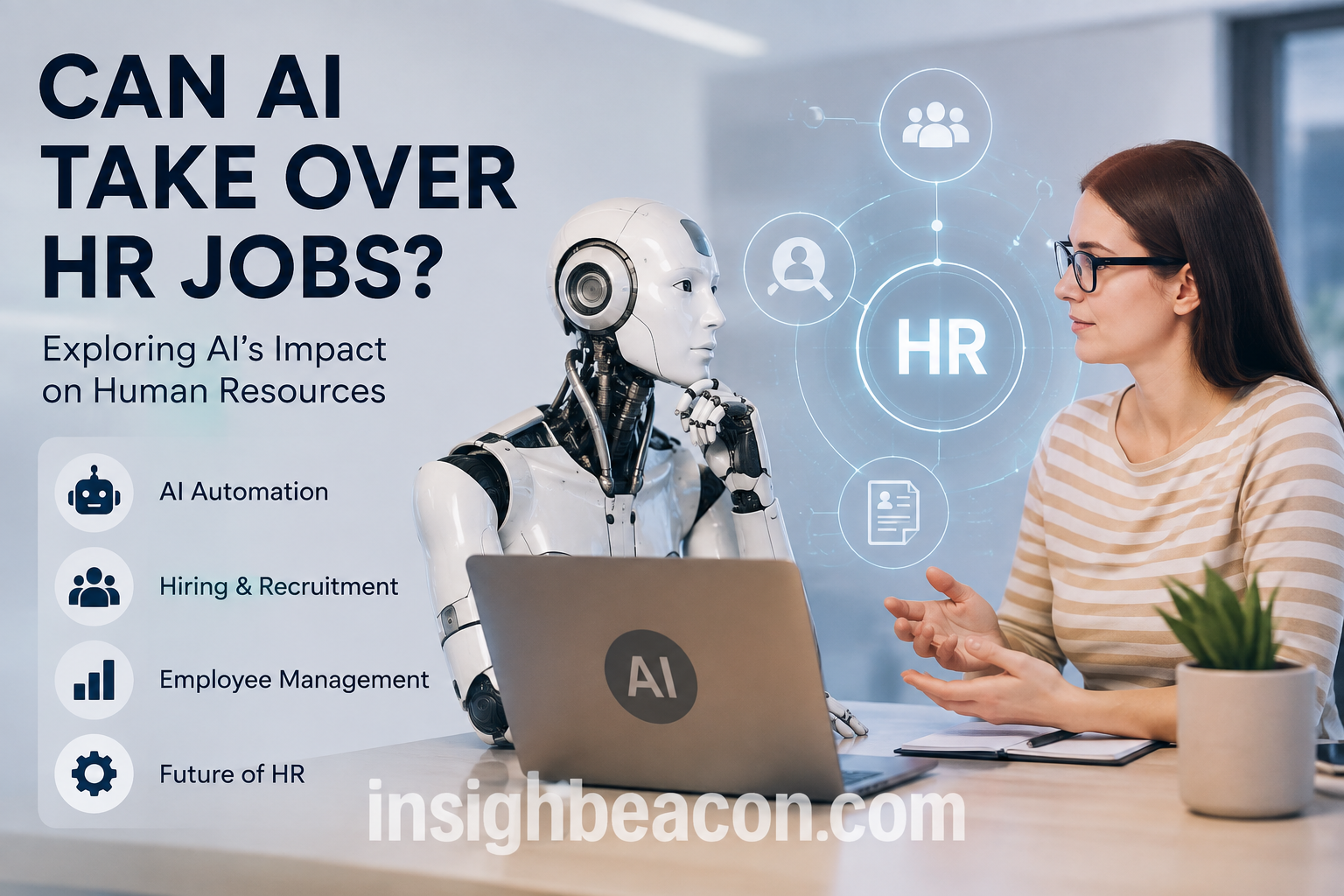
Can AI take over HR jobs has become a pertinent issue in the context of the use of artificial intelligence by organizations in recruitment, employee management, payroll processing, analytics, and internal communications. However, despite all the abilities of AI to process the necessary information, the field of human resources includes much more than simply managing data.
AI and Its Impact on HR Practices
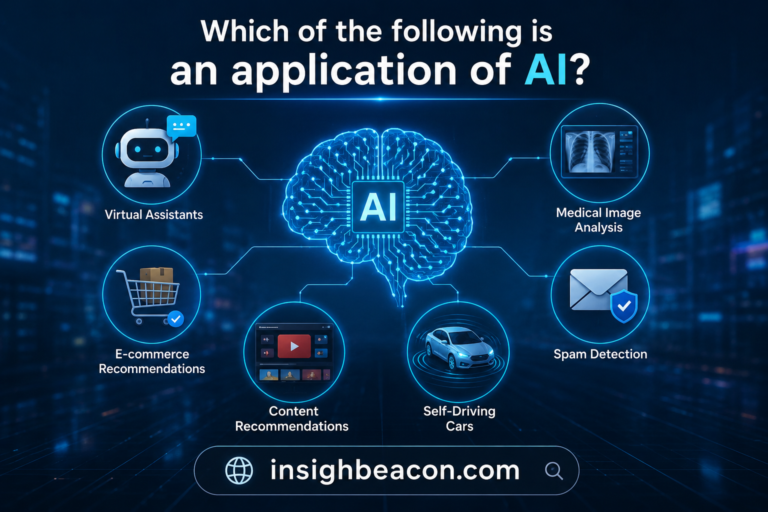
Can AI take over HR jobs AI is increasingly proving helpful in the areas where human resources specialists typically invest considerable effort in repetitive actions. To judge that fairly, it helps to know which of the following is an application of AI and which is not.
One such case is recruitment. The use of AI enables HR specialists to sift through the applications, find necessary qualifications, arrange interviews, and communicate basic information to the applicants.
The technology can assist HR professionals in analyzing a large amount of employee-related data. An HR team may use the technology to analyze patterns in terms of employee engagement, turnover, attendance, or workforce planning.
For instance, if there is a rise in the rate of employee turnover in a certain department, then an AI system will be able to detect patterns within the data. Nevertheless, identifying the pattern is something different from explaining why employees leave a workplace. This last part may require communication, empathy, and human judgment.
What HR Tasks May Be Automated with AI?
The use of artificial intelligence is most effective when it comes to repetitive tasks that are organized and based on clearly defined information.
There are certain responsibilities of an HR specialist that may be automated using AI or assisted by the technology. They include:
- Sifting through the applications following the certain set of rules
- Arranging interviews and meetings
- Answering common employee questions
- Organizing HR documents
- Supporting payroll administration
- Creating basic reports
- Tracking employee information
- Analyzing workforce data
- Assisting with onboarding processes
- Sending routine communications
Take the case of an employee needing to determine his or her number of remaining vacation days. Rather than sending an email and having to wait for a reply from an HR representative, an artificial intelligence-based HR management system could offer an instant answer.
It doesn’t mean that the HR expert’s job will become obsolete. The only thing that will change is the way the time of HR experts is spent.
In case technological means answer all routine questions, HR experts will be able to dedicate their attention to more complex issues.
Why Human Judgement Is Important
The field of human resource management is about dealing with people, and there are numerous cases at work that will never be explained solely by the numbers.
One worker could consult HR because he or she feels that there is a conflict between them and their co-worker. The other one might need help with coping with stress or communication challenges. Managers will require assistance in addressing delicate performance issues.
This calls for something other than an automatic solution.
The seasoned human resource professional will be able to hear the people in question, take into account the context, ask necessary questions, and contemplate what effect various decisions could have.
Technology is able to give information and detect patterns, but it doesn’t experience workplace dynamics like a person does.
The decision that appears to be rational when all the data are considered could have consequences that are hard to quantify.
AI in Recruitment
Recruitment is an area that could benefit greatly from the application of artificial intelligence.
Recruiters can get many applications for just one position. Checking all applications manually takes much time. Using AI may assist in choosing candidates who seem to have relevant qualifications and experience.
AI chatbots may provide answers to basic questions asked by candidates and inform them about the progress of the recruitment process.
This will make the process more efficient, however, recruiting should be supervised carefully. The thing is that artificial intelligence systems are based on the data that they get trained on. Therefore, AI can reflect the bias in its decisions.
For instance, an automatic recruiting system might be biased in favor of some kind of candidate depending on previous hiring records.
Thus, there should be supervision of such decisions by human recruiters.
The right strategy would not be getting rid of people in the recruitment process but integrating the technology into it.
AI and Employee Experience
Supporting the employee experience is another sphere where AI may be helpful.
Organizations can employ AI-based solutions to help to answer employees’ FAQs, refer them to the relevant policies, and assist with onboarding.
An employee starting work in a company has multiple questions in their mind during the initial days. The questions may relate to the work processes, policies, working time, and benefits of the organization.
Nevertheless, not all the employee queries can be solved through an automated solution.
For example, when an employee has any issues regarding their work conditions, it is more convenient for them to communicate it directly to an HR specialist rather than to some automated solution.
Such a situation is of special importance in the situations when the relationship between the employee and management plays a vital role.
Emotional Intelligence
One of the skills that differentiate people from HR specialists is the skill of emotional intelligence.
HR specialists should be able to recognize the emotions of others, cope with complicated discussions, and give sensitive information.
For instance, an employee receives some unpleasant news regarding the promotion. AI may state the information in a neutral way, but the human manager or HR specialist may understand the feelings of the employee and give a proper response.
It is important due to the fact that the decisions made in a workplace have a great emotional aspect.
Is There Any Possibility of AI Completely Replacing HR Jobs?
The question of whether AI can take over HR jobs completely is not as simple as it looks initially.
Certain HR jobs will definitely change greatly due to the increase in the level of automation. Those jobs that are associated with a lot of administrative work can be automated more compared to jobs that are connected to strategy, employee relations, leadership, and organizational development.
But automation does not always imply the complete disappearance of jobs.
In history, it was proven that innovations usually result in the transformation of jobs but not in the disappearance of entire occupations. HR professionals will play a bigger role in the interpretation of AI analysis, automation control, ethical use, and handling complex issues surrounding employees.
What this implies is that the HR professional of the future has to be someone who has both interpersonal and technical expertise.
New Skills HR Professionals May Need
With an increase in the use of AI in human resources, HR practitioners may have to develop additional skills. For some, those skills also open the door to learning how to work for yourself as an independent HR consultant.
Data literacy can assist HR workers in understanding workforce analytics and analyzing the information created by AI programs. Technology awareness can help in evaluating HR software and other forms of automation.
At the same time, human skills may become crucial in performing the functions related to HR.
Skills such as communication, negotiation, leadership, empathy, critical thinking, conflict resolution, and relationship management are hard to automate effectively.
A person possessing both technological and human skills will thus be especially valuable.
For instance, an HR professional capable of analyzing information about the employees and then talking to them would possess the advantages of both approaches.
How Can AI Assist in Strategic HR
HR specialists have shifted from administrative work towards strategy. Good strategy starts with knowing what is a business need before choosing any tool.
Companies have to rely on HR teams in their efforts to solve problems with workforce planning, retention, culture, leadership development, and talent strategy in general.
The use of AI can be helpful for such endeavors in that it can make sense of the analysis of huge data and identify trends.
For instance, in case of the growth of the firm, the HR may have to figure out which departments will need more people and what skills will be required from them.
AI can provide the analysis of the workforce information, while HR professionals will have to interpret the findings.
Strategy is related to understanding the goals of the organization, its people, culture, and future uncertainties.
These elements require judgment and not just automation.
Potential Challenges of Overreliance on AI
Even though AI technology brings many advantages, there are some risks of using technology excessively.
First, bias is one of the possible challenges of using AI. When the AI system is trained using biased data, it is also likely to provide biased solutions.
Another challenge of AI use is privacy. The human resource department deals with personal, financial, and performance-related information of employees. Thus, companies need to use AI technologies correctly and safely.
Finally, overreliance on AI systems may lead to losing the human element.
When employees feel that all problems related to their workplace are solved by some machine, they may feel uncomfortable dealing with the human resource department.
HR Future Is Probably Going to Be Collaborative
There could be no rivalry between artificial intelligence and HR experts, but the aspects in which they could supplement each other should be considered.
In particular, AI can deal with routine paperwork, work with data rapidly, and identify patterns, while a person can make decisions, be empathic, be creative, take charge, and interpret things.
Think about such HR where AI processes usual applications while HR professionals will be talking to candidates. The automated assistant will be answering routine questions regarding the policies, while HR will be dealing with more complicated cases. Analytics will point out any possible problems regarding retention, while managers will be talking to employees and understanding what is going on.
Such an approach will help to use the technology to become more efficient without eliminating the human aspect of HR.
Thus, in the workplace of the future, there may be fewer boring tasks for HR professionals and more focus on human interaction.
How to Prepare for AI in HR
When thinking about AI, companies should think first about what processes require improvements.
Not every single process has to be automated. They should analyze potential benefits, costs, risks, and the effect on employees before implementing anything.
Training is also important. HR specialists have to know how the system works, its limitations, and when they should intervene.
Policy should clearly indicate what is done with the information of employees and how automated decision-making is reviewed.
Finally, the most important thing is that organizations have to talk to employees about their AI usage.
FAQ
Can AI replace HR professionals?
While AI could potentially take care of certain HR roles, especially the administrative aspects, there are various roles performed by HR that depend on human intuition and judgment and involve communication skills and relationship building.
What types of HR activities are most susceptible to automation?
Activities such as interview scheduling, application review, answering common questions from employees, data entry, reports, and documentation are some examples of activities that could benefit from AI technology.
Is there any use of AI in recruiting people?
Yes. AI could be used by recruiters for application processing, scheduling interviews, selecting suitable candidates, and communicating.
What skills should HR personnel acquire?
Data analysis skills, technological literacy, critical thinking, communication, emotional intelligence, leadership, and conflict resolution skills could prove useful to HR personnel.
Must all processes related to HR be automated?
Generally, complete automation of processes related to HR would not be appropriate since many workplace situations are associated with sensitive, emotional, judgemental, and relational aspects.
Conclusion
The question of whether can AI take over HR jobs roles is not an easy one to answer with just yes or no. AI has the ability to take over many repetitive tasks and completely revolutionize the way the HR department works; however, human resources consist of much more than just administrative processes. Tasks such as recruitment, relations with employees, handling conflicts, leading and managing employees, developing company culture, and making critical decisions are not easy to perform without human qualities.
The future of HR is more likely to consist of cooperation between man and machine rather than total substitution. While the former helps achieve efficiency and make useful predictions, the latter provides empathy, judgement, communication, and strategy. With the adoption of new technologies by organizations, the specialists who will be able to cooperate successfully with AI and develop their human qualities can become more competitive in the modern world.