Understanding which of the following is an application of AI in everyday life
The use of artificial intelligence is no longer limited to fictional stories but has been incorporated into daily life, offices, classrooms, hospitals, and industries. From voice assistants that answer basic queries to machines that analyze abnormal patterns in huge databases, the use of artificial intelligence is getting more visible every year. However, when one is faced with several instances, it is not always easy to give the correct answer to the question, “Which of the following is an application of AI?”
An effective way of looking at AI is to examine how information is processed by the system. While the traditional approach is to follow pre-set rules, AI can process information through pattern recognition, learning, prediction, and adaptive behavior. His difference becomes clearer when we look at practical examples from daily life and modern industries, especially when determining which of the following is an application of ai?
What Makes a Technology an AI Application?
Artificial intelligence is defined as computer programs that are developed to carry out functions that would usually be performed through human intelligence. The functions include identifying images, processing language, forecasting, finding patterns, making recommendations, and decision-making using available information.
But just because something operates automatically, it doesn’t mean that it should be categorized under AI technologies. An example is a normal calculator that will perform the calculation quickly, but it won’t learn from the process. Also, the normal alarm clock will follow the programmed routine without interpreting any information or becoming better at doing so.
But AI becomes especially relevant if there is too much data to work with or if the situation requires more than simple programming. The recommendation engine will look at the past behavior and make recommendations on the content a person might like. The fraud detection system will spot the abnormal transactions and see how they fit in patterns of the historical data.
This issue is especially relevant to the students, professionals, and entrepreneurs who often have to use a wide variety of software.
Popular Use Cases for Artificial Intelligence
Artificial intelligence is being implemented in an unexpectedly wide array of industries today. While some of its use cases receive significant media attention, there are also many applications of AI that run behind the scenes.
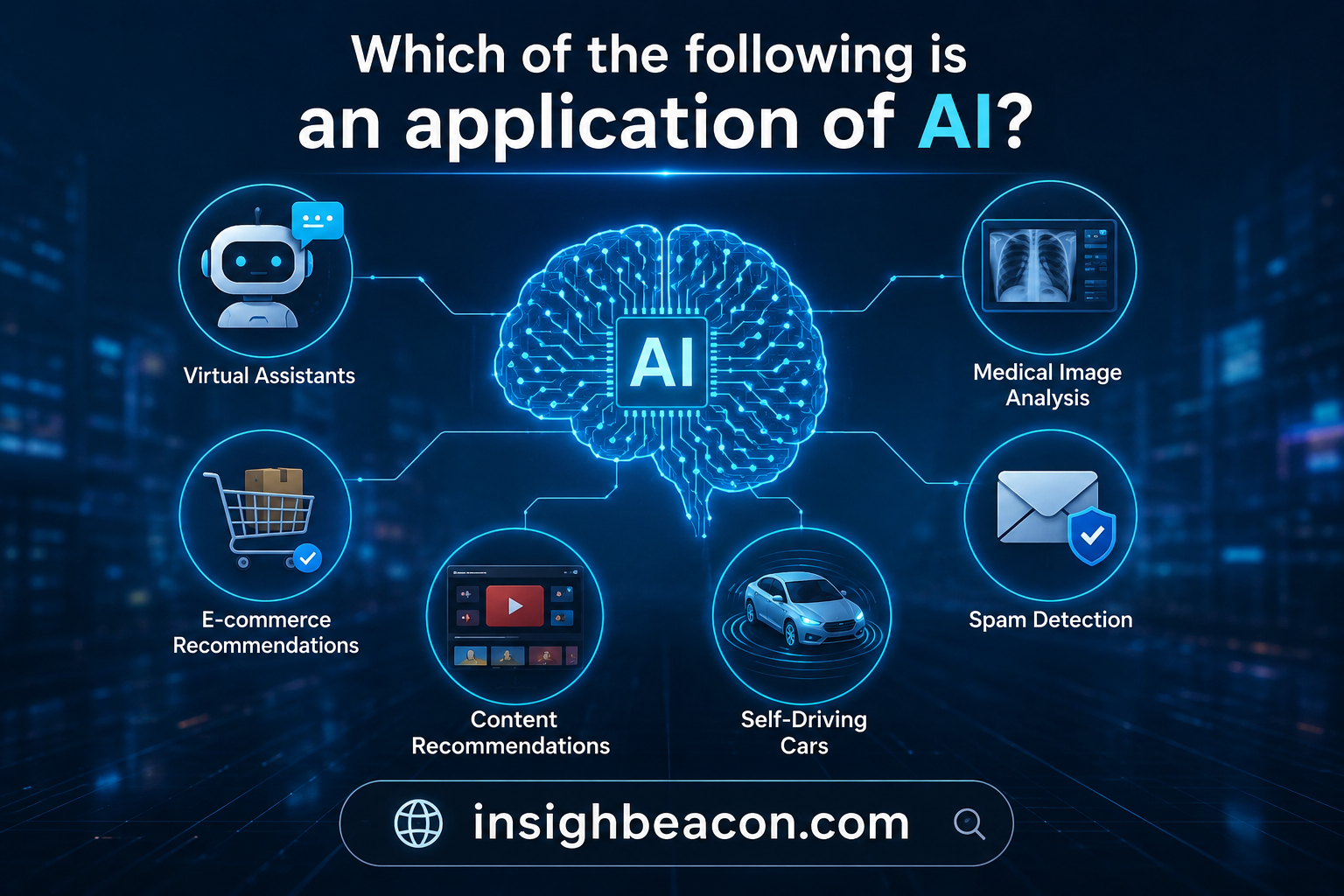
Search engines make use of artificial intelligence to understand the queries and produce better search results. The streaming platform uses AI for making recommendations on movies or music. Email service makes use of algorithms for spam detection or email sorting. Smartphones use scene recognition technology to enhance images or recognize faces.
AI can be used in the health care industry for analysis of imaging data, finding patterns in the data about patients, and carrying out scientific research. Financial companies use artificial intelligence in assessing financial risk, detecting suspicious transactions, and analyzing market data.
The transportation industry is also another domain where AI is used widely. Contemporary cars use computer vision and machine learning for object detection and analyzing road conditions for providing assistance to the drivers. Logistics businesses use AI for predicting demand and optimizing delivery routes.
These examples prove that artificial intelligence does not mean only humanoid robots or sci-fi machines. In most cases, it is software performing tasks of processing information.
Which of the following is an application of ai
In case when there is a need to recognize which technology is an AI technology, you should check whether there is any learning, prediction, recognition, reasoning, or intelligent decision-making taking place.
For instance, a system analyzing thousands of previous cases of customers’ interaction with a service and predicting which customers might leave the service is using AI methods. Also, recognizing objects in a photo is an example of AI usage since image recognition usually requires machine learning.
At the same time, a computerized digital clock, counting down to zero from the number chosen by a user, cannot be an AI technology since it is a matter of a predetermined process. Similarly, performing a simple calculation according to provided instructions is not an AI task.
Thus, it is not important whether a technology is computerized. Nearly all technologies nowadays are computerized. What is important to understand is whether the technology is using data and intelligent computations for pattern recognition, predictions, interpretation of information, or decision-making.
How To Easily Recognize AI
Take, for instance, when a teacher provides students with four examples.
Calculation done by a calculator using a defined formula.
Operation of a timer based on a predetermined schedule.
Facial recognition system that identifies people in photos.
Clock that shows the current time.
The third example above would be the best representation of AI since the system will be required to analyze visual data and identify patterns of faces.
This approach makes it possible to easily recognize AI. If, for instance, an example includes voice recognition, analysis of image, prediction, recommendation, translation, and use of prior information, then one may consider AI.
Machine Learning: The Driving Force of Many Artificial Intelligence Systems
Machine learning is one of the key technologies related to artificial intelligence in the modern world. Instead of having programmers write a set of rules that would define what needs to be done in any conceivable situation, machine learning technology allows for recognizing patterns in data.
For instance, in order to determine whether an email is spam or not, a typical system might have a list of rules prohibiting certain keywords or email addresses. A machine learning approach would involve analyzing examples of unwanted and valid emails and detecting patterns.
With increasing amounts of high-quality training data, the algorithm becomes more efficient in detecting meaningful patterns. This does not mean that the algorithm operates like humans do. It simply means that mathematical models are utilized to analyze information and generate meaningful results.
There are many practical applications of machine learning in today’s world, such as recommendation systems, image classification, voice recognition, predictive maintenance, and some types of cybersecurity.
Generative AI and Modern Digital Tools
Generative AI is a relatively new field that has gotten a great deal of attention. It is capable of generating text, images, audio files, computer code, and many other different types of content in response to instructions given by the user.
One example of such technology would be chatbots. The user gives an instruction in natural language, and the machine generates a reply depending on what it learned during training. Image generation systems can also work on similar principles.
Companies use generative AI more and more often for purposes of providing customer service, idea generation, document analysis, marketing help, and internal work productivity. Students may come across various learning tools based on AI that will explain things, summarize data, and generate practice questions.
But this does not mean that all generated information is right. Such systems may make mistakes, fail to understand the context, or give obsolete data.
AI in Healthcare
AI in Healthcare—an example of the application of AI technologies. In addition to creating information, there are a lot of data sources in medical organizations, such as pictures, lab test results, patient records, and data from research. Coordinating that data across providers is the idea behind health homes and coordinated care.
It is possible to use AI to find patterns in images or even assist scientists in working with vast amounts of data. The key feature of such systems is the necessity to flag some data to be reviewed by people and not replace physicians and other healthcare professionals with these machines.
Moreover, AI systems could assist in developing drugs by analyzing the biological data provided to them. These technologies have the potential to reduce the time needed to conduct research and suggest scientists promising directions of work.
What is crucial is that AI works as a tool of assistance. In sensitive environments, qualified professionals must evaluate results and consider information that an algorithm may not understand.
AI in Education
AI applications also have a place in education. Adaptive learning systems will be able to analyze the learner’s performance and give advice about exercise in case of poor results.
Language learning applications can also employ AI technology to assess the pronunciation of the user and offer personalized exercises. The system will be able to organize educational material and explain commonly asked questions.
AI can be used by teachers in order to organize information and manage their work, as well as create training materials for their students. But still, technology is supposed to support the teaching process but not replace relations between teachers and students.
The educational system powered by AI is supposed to improve comprehension of the material and not give answers.
AI in Business and Customer Service
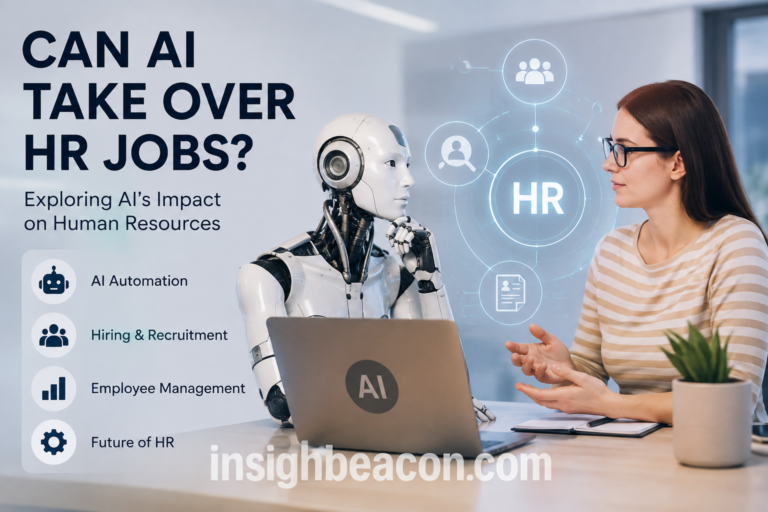
Companies have access to vast amounts of data that pertain to their customers, sales, products, and processes. AI technologies can be used to transform this data into useful knowledge. One question this raises for employers is whether AI can AI take over HR jobs, or simply change them.
Customer services systems can employ natural language processing algorithms to comprehend the requests and connect them to suitable sources. Recommenders can suggest related products, taking into account browsing or purchasing history. Sales departments can utilize predictive models to recognize promising leads.
Another application of AI is demand forecasting. For instance, if a retail company knows what products will be purchased by the customers within a specific period of time, it can take corresponding steps.
All these examples demonstrate how useful AI can be, but at the same time, companies should implement responsible practices. Bad quality data will result in bad predictions, whereas biased data will lead to unjust decisions. Used responsibly, AI is one of the practical ways to make your business successful today.
AI in Transport and Smart Cities
Contemporary cities produce vast quantities of data from transportation, traffic systems, sensors, and other sources. Artificial intelligence can be used to analyze such data and uncover certain patterns.
The data in traffic management systems can be used to forecast traffic jams and optimize the work of traffic lights. Transportation companies can use analytics of routes and predictive maintenance to decrease delays and forecast possible technical problems with equipment.
Additionally, smart city projects can apply AI to understand energy consumption, demand for public services, and environmental issues. The idea is to increase the efficiency of infrastructure and improve the quality of services provided to citizens.
All of the mentioned systems provide an example of how beneficial the usage of artificial intelligence can be when working with large amounts of data that need to be analyzed in a very short time. While humans can interpret the results, computers do it much faster.
AI in Cybersecurity
There are millions of possible threats for the cybersecurity team each day. AI can detect unusual patterns in the activity of the networks, log-ins, files, and many other forms of digital communication.
The technology of machine learning does not rely only on the predetermined list of threats but focuses on unusual behavior. For instance, unexpected activity in the accounts can provoke further analysis.
AI does not mean that cybersecurity is becoming easy. Criminals constantly change their approach to hacking, and there may be some mistakes in automation. Security professionals therefore remain essential for interpreting warnings and deciding how to respond.
AI and Personalization
One factor making AI pervasive now is personalization. Recommendations that seem to be made specifically for an individual user are common.
Music apps could offer music that is suggested to a person based on his preferences. E-commerce websites could suggest products considering their past interactions. Social media websites could rank the content based on signals of relevance to a particular user.
Recommendation algorithms utilize a huge amount of behavioral data, trying to make guesses of what kind of things a user may like, and then change their recommendations accordingly.
Personalization makes life easier but also causes concerns regarding privacy and data collection. Users should know what kind of data a website collects from them and how it is used.
AI vs Traditional Automation
It is important to distinguish the two types of technology when learning about them.
Traditional automation uses clear instructions. When a machine is set to turn off the lights at 7 p.m., it does so because a rule commands it to do so.
Systems with AI can process more complicated rules. For example, an intelligent energy consumption system can use historical data, weather, and other factors to estimate future energy needs.
Both forms are practical. In case the task requires repetition, automation might be more cost-effective. On the other hand, using AI is beneficial if there is some level of uncertainty.
The Relevance of AI Applications
The increasing usage of AI applications has transformed the way people handle information. Activities that take hours of analysis could be handled by intelligent software within a shorter period.
For businesses, this could lead to better forecasting, faster customer service, enhanced decision-making, and increased efficiency. For individuals, AI could make online services more personal and accessible.
Nonetheless, responsible usage remains important, as well as the fact that the AI system could result in wrong information, poor quality of training data, and issues with privacy. Thus, individuals should take AI applications for what they are: tools and not ultimate authorities.
Combining the capabilities of the machine with those of the human yields the best outcomes. Machines can handle data swiftly, but the humans supply context, ethics, and creativity.
How to Identify AI in Real-Life Questions
In solving an exam problem or doing research related to a certain technology, one should begin by determining the function performed by the system.
If it does anything like speech recognition, image analysis, forecasting future events, recommending something, understanding human language, identifying patterns, or learning, it is likely that the system uses AI.
If the system just executes a set procedure without any learning or interpretation of information, it may be just an ordinary automation process.
Also, it is worth keeping in mind that not all the AI technologies look fancy; for example, a simple model used for fraud detection behind the scenes may be technically more important than a fancy robot.
In conclusion, the key is to understand the function of the system and not its form.
Frequently Asked Questions
What is the easiest way to identify an AI application?
Look for systems that recognize patterns, learn from data, understand language, identify images, make predictions, or provide recommendations. These characteristics commonly indicate AI or machine-learning technology.
Is every automated system an AI system?
No. Automation can operate entirely through predefined rules. AI is generally associated with systems that analyze information in more intelligent or adaptive ways, although the exact boundary can vary between technologies.
Is facial recognition an example of AI?
Yes, facial-recognition technology commonly uses AI and machine-learning techniques to analyze visual features and identify or verify faces.
How is machine learning related to AI?
Machine learning is a major branch of AI. It allows computer systems to learn patterns from data and use those patterns to make predictions or decisions without requiring every rule to be manually programmed.
Can AI completely replace human decision-making?
AI can automate or support many tasks, but it does not automatically replace human judgment. In areas involving ethics, complex context, or important consequences, human oversight remains especially valuable.
Concluding Remarks
Knowing which of the following is an application of AI becomes easier once you understand what AI actually does. Forget about classifications and consider whether the system is able to recognize patterns, understand information, learn from data, predict outcomes, and produce something useful.
Artificial intelligence has become an integral part of our everyday lives as it powers our recommendation services, search engines, health care, education, transport, and cybersecurity, among other things. This technology will develop further; however, one thing will remain the same—AI helps computers do what goes beyond simple instructions.