Understanding What Are Public Health Problems and Why They Matter
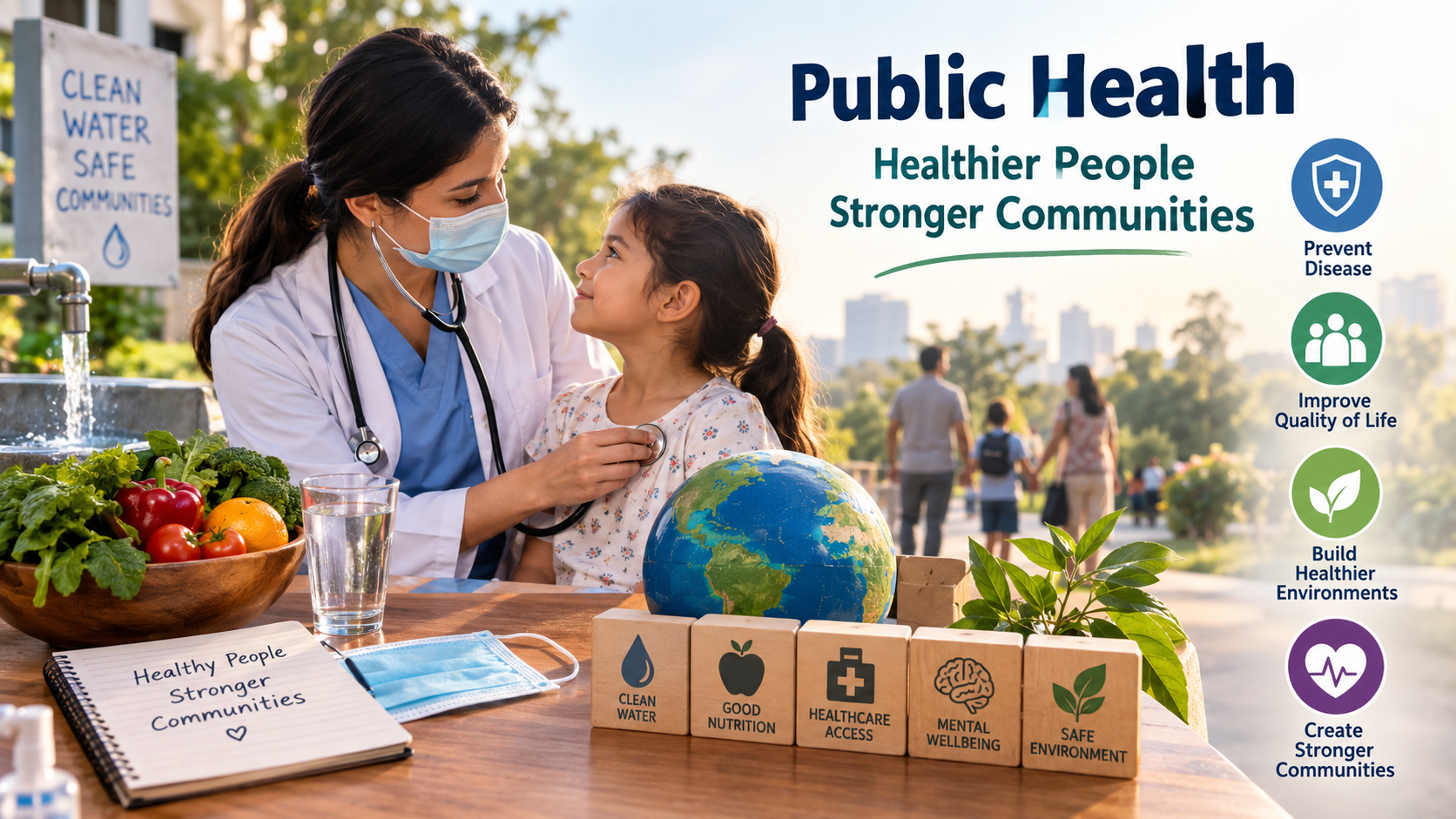
What are public health problems? Consider a society wherein kids fail to attend schools due to illnesses that could have been prevented, people face difficulties accessing clean water, and seniors fail to access healthcare facilities that are within reach. These are some instances that appear to be quite different from one another but that can actually show the existence of bigger problems affecting the health of the population. This is an area where public health plays a vital role. Unlike medical care that focuses on curing the affected individual, public health focuses on the health determinants. Identifying such determinants enables the community to foresee future risks and adopt preventive measures against them.
The questions regarding the problems in public health can then be rephrased to inquire about the health problems affecting the whole population instead of individuals. These problems may include infectious diseases, environmental pollution, malnutrition, lack of access to healthcare facilities, adverse physical and social environment, and mental wellbeing, among others. In this case, the public health practitioners try to understand the causes of these problems and take steps to minimize them.
What Constitutes Public Interest in Health Matters?
Public health interest involves the health issues that affect many people in a community or the ones that have the ability to impact the whole community. Unlike a personal health matter that usually entails only physical health factors, the public health interest usually involves other elements such as social, economic, behavioral, and environmental aspects.
For instance, while the case of one person being affected by food poisoning would constitute a personal health matter that would be diagnosed and treated, a case whereby hundreds of individuals get sick through the same type of food poisoning constitutes a public health interest.
The reason why this is the case is because the approach towards addressing the two situations differs.
Infectious Diseases and Protection of Communities
Infectious diseases continue to be an important public health issue. There are different microbes that can be transmitted from one individual to another person through food and water contamination and even through specific animals and insects.
While some infectious diseases can be easily controlled if communities have access to vaccines, sanitation, treatment, and proper health information, others can spread fast without these safeguards.
The respiratory diseases, tuberculosis, malaria, dengue fever, and other communicable diseases can put strain on the healthcare system. They can also have an impact on schools, workplaces, transportation, and the local economy.
Thus, prevention is key. Immunization campaigns, handwashing, clean water, monitoring of disease, elimination of mosquitoes, and public awareness can help prevent their spread.
The bottom line is that ensuring safety for one individual will benefit the entire community at large.
Nutrition and Hunger Issues
Healthy living greatly depends on the nutritional food available to individuals. There are cases where communities suffer from hunger or lack of nutritious foods.
Nutritional problems vary among individuals, as some may lack adequate food while others may have excess amounts of food without nutrients. There are those who suffer from malnutrition due to consumption of highly processed foods.
Children get affected because food is very crucial in physical development and learning. Lack of proper nutrition will lead to lack of energy in adults.
It is not easy to deal with nutritional problems just through educating the public about healthy eating. Issues like food prices, agricultural practices, and availability of food and education will come into play.
Contaminated Water Sources and Poor Sanitation
Water is one of the basic necessities for a healthy society. Contamination of drinking water sources can cause the rapid spread of disease.
Poor sanitation can only add to the problem. Poor sanitation conditions, such as inadequate toilets and poor waste management practices, can increase the spread of harmful microorganisms.
The result can be even more problematic in societies that lack access to proper healthcare. What should have been a preventable waterborne disease can become deadly due to lack of access to healthcare facilities.
Improving water and sanitation infrastructure will not only help in the prevention of diseases but will also help in other aspects of daily life.
This is the reason why improvement in sanitation is essential for the growth of public health systems in the future.
Contaminated Drinking Water and Poor Sanitation Facilities
Fresh and clean water is an essential requirement for any healthy community. If the drinking water is contaminated, it can result in a rapid outbreak of diseases.
Sometimes poor sanitation facilities can worsen the condition. Improper waste disposal and contaminated water supply can create an environment that will help in the spread of pathogens.
The condition becomes even more serious in those areas where medical care facilities are poor. The illness caused by contaminated water becomes more dangerous in areas where proper medical facilities are not available.
Sanitation facilities have significance for reasons other than just being able to prevent one particular disease. Fresh water is required for hygiene, cooking, education, economy, and other aspects of life.
This is the reason why investment in sanitation is an important aspect of public health development.
Mental Health as an Aspect of Public Health
Another key component of public health is mental health. Mental health concerns like stress, anxiety, depression, loneliness, and many others are experienced by people of all ages.
For a while, mental well-being was considered a personal concern and not necessarily an aspect of public health. Nowadays, it has been acknowledged that mental health has the ability to impact education, work performance, interpersonal relationships, physical health, and overall quality of life.
Strategies in terms of public health may involve campaigns, school-based programs, counseling services, community-based programs, prevention of crisis situations, and policies for reduction of damaging social factors.
Mental health promotion does not have to be limited to treatment of illnesses. Mental health promotion may mean the formation of supportive communities where people feel included, appreciated, and encouraged to look for help when necessary.
Once people realize that asking for help is a natural component of taking care of one’s health, early intervention is easy to achieve.
Limited Access to Health Care Services
Access to healthcare is yet another factor that could determine the well-being of the whole population. A community can have hospitals and physicians; however, health care services may not be available to everyone in the community.
Problems related to distance, expenses, availability of health care professionals, limited work hours of health care clinics, and lack of information can all limit access to health care services.
Consider the situation of a person living far away from a health care facility and developing symptoms. The person will have to spend hours traveling to get help from a professional despite the existence of treatment.
What are public health problems? Public health measures to tackle the issue include community clinics, mobile health care services, health education, immunization programs, telehealth, and policies to increase accessibility to health care services.
It is most effective to receive healthcare before the issue becomes critical.
Other Health Problems and Lifestyle Factors
Non-communicable diseases such as heart problems, diabetes, specific cancers, and respiratory problems form yet another important field of consideration.
As compared to many infectious diseases, non-communicable diseases cannot be transmitted from one individual to another. Nevertheless, the possibility of developing a disease may depend on several different factors like exposure to tobacco smoke, lack of physical activity, poor nutrition, alcohol consumption, environment, genetic predisposition, and social situation.
In public health, emphasis is made on preventive measures since chronic diseases can be burdensome for an individual, a family, and the health care system.
The promotion of exercise, tobacco control, nutrition education, screening, and awareness may help individuals adopt a healthier lifestyle and detect any disease at an early stage.
Nevertheless, preventive measures should not turn into an accusation of individuals since people choose within particular contexts determined by income, education, culture, nutrition, job requirements, etc.
Maternal and Childhood Health
The health of mothers and children has been linked with the efficiency of a healthcare system. There are particular periods during pregnancy, child birth, infancy, and early childhood that can have an impact for a lifetime.
Mothers may need checkups, nutrition, skilled delivery, and emergency services while infants and children need to be provided with proper nutrition, vaccination, developmental screening, and protection from avoidable illnesses.
These problems can be solved through public health initiatives such as the provision of prenatal care, breastfeeding information, childhood vaccinations, family education, and maternal health services.
The benefits resulting from appropriate care for mothers and children may carry forward for future generations, as well as good development in childhood, which may result in education, job opportunities, and general well-being in life.
Health Concerns and Social Inequalities
As one seeks to define what are public health concerns, one needs to keep in mind the fact that health is interwoven with society.
Individuals who are poor might be more likely to be exposed to hazardous housing, pollution, food insecurity, and lack of access to health care. Communities which live far away may lack medical institutions. Individuals who do not have much education might find it difficult to access health information.
This leads to large disparities in terms of health outcomes between different communities.
Public health needs to play an important part in addressing such social determinants of health. Such aspects as housing, education, jobs, transport, food availability, healthy environment, and social networks can affect the well-being of individuals.
An effective public health approach not only asks “Why are people sick?” but also “What are the circumstances preventing people from being healthy?”
That broader question often leads to more effective solutions.
The Role of Health Education
The possession of information can be among the most potent instruments of public health. Those individuals who are aware of their health risks are more likely to make sound decisions regarding when to seek professional help.
There are a number of areas that can be addressed in health education, including hygiene, healthy eating, vaccinations, disease prevention, psychological well-being, reproductive health issues, environmental safety, and proper use of healthcare facilities.
Educational settings like schools are particularly effective places to conduct health education since it is possible to educate young individuals before harmful habits take root.
But information should be clear and truthful. Medical terminology can confuse people and cause misunderstanding, while inaccurate information can misguide and harm.
Thus, effective health communication should be clear, culturally sensitive, evidence-based, and accessible.
Community Solutions for Public Health Problems
Public health is not something that healthcare workers should solve alone. Many other groups, like governments, schools, households, businesses, research, communities, and people, can help.
Communities within an area can discover health issues that may not be known to bigger institutions. Community members can identify areas prone to flooding, areas where waste management is poor, or where there is no safe place for exercise.
Community involvement ensures that public health interventions are made according to the actual needs.
Funding, infrastructure, legislation, health care, and disaster response from governments, education from schools, and preventive measures and advice from healthcare workers can help.
When these groups work together, effective public health solutions can be achieved.
Technology and the Future of Public Health
Technology is revolutionizing the way that public health practitioners gather information, communicate with communities, and react to health threats.
Electronic health records, disease surveillance, m-health applications, e-learning, and data analytics can be used to detect trends that might otherwise go unnoticed.
For instance, monitoring of health information can help identify unusual activities of diseases, while digital communication can be used by public health organizations to share information during emergencies.
Artificial intelligence might increasingly come into play as far as data analytics, prediction, medical research, and resource planning are concerned. Nonetheless, technology has to be applied responsibly, taking such things into account as privacy, accuracy, accessibility, and fairness.
The role of technology in public health has to be supportive rather than substitute the human knowledge necessary to communicate with people.
Why Prevention is Better than Reacting after a Crisis Occurs
One of the key elements of public health is prevention. It is essential to take care of those who are ill, but it is even more significant to prevent illnesses.
Vaccination, sanitation, environment control, health education, testing, nutrition assistance, and early interventions are among those strategies that belong to prevention.
Prevention is often unnoticeable because its success lies in the absence of an action.
If there is no outbreak of some diseases due to a high rate of vaccination, it will not be a noticeable event.
It is exactly this kind of success that the public health system should try to achieve.
The best functioning systems do not act when their communities face an emergency, but rather they discover a potential risk and develop preventative measures.
Frequently Asked Questions
What is the main purpose of public health?
The main purpose of public health is to protect and improve the health of populations. It focuses on prevention, health promotion, disease control, environmental safety, education, and policies that support healthier communities.
Why are public health issues important?
Public health issues can affect large numbers of people and influence education, employment, healthcare systems, economic stability, and quality of life. Addressing them early can prevent avoidable illness and reduce long-term harm.
What are common examples of public health challenges?
Common examples include infectious diseases, air pollution, unsafe drinking water, poor sanitation, food insecurity, mental health concerns, chronic diseases, limited healthcare access, and maternal and child health challenges.
How can individuals contribute to public health?
Individuals can contribute by following reliable health guidance, practicing good hygiene, staying informed, using preventive healthcare services, protecting the environment, supporting healthy community practices, and sharing trustworthy information.
Who is responsible for solving public health problems?
Responsibility is shared among governments, healthcare professionals, schools, communities, organizations, researchers, and individuals. Effective public health usually requires cooperation between many different groups.
Final Thoughts
Understanding what are public health problems are means looking beyond individual illness and considering the conditions that shape the health of whole communities. Clean water, safe environments, nutritious food, accessible healthcare, mental wellbeing, disease prevention, and education are all connected. When these foundations are weak, health challenges can become harder to control. When communities invest in prevention and cooperation, they can create stronger systems that protect people before emergencies develop. Public health is therefore not only about responding to disease; it is about creating environments where healthier choices and safer living conditions are possible for everyone.
The most effective solutions often begin with simple questions: Who is being affected, why is the problem happening, and what can be changed? These questions encourage communities to look at causes rather than symptoms alone. Public health requires patience, planning, education, and cooperation, but its benefits can last for generations. A healthier community does not happen by accident. It is built through informed decisions, shared responsibility, and consistent efforts to make health a priority for all.