
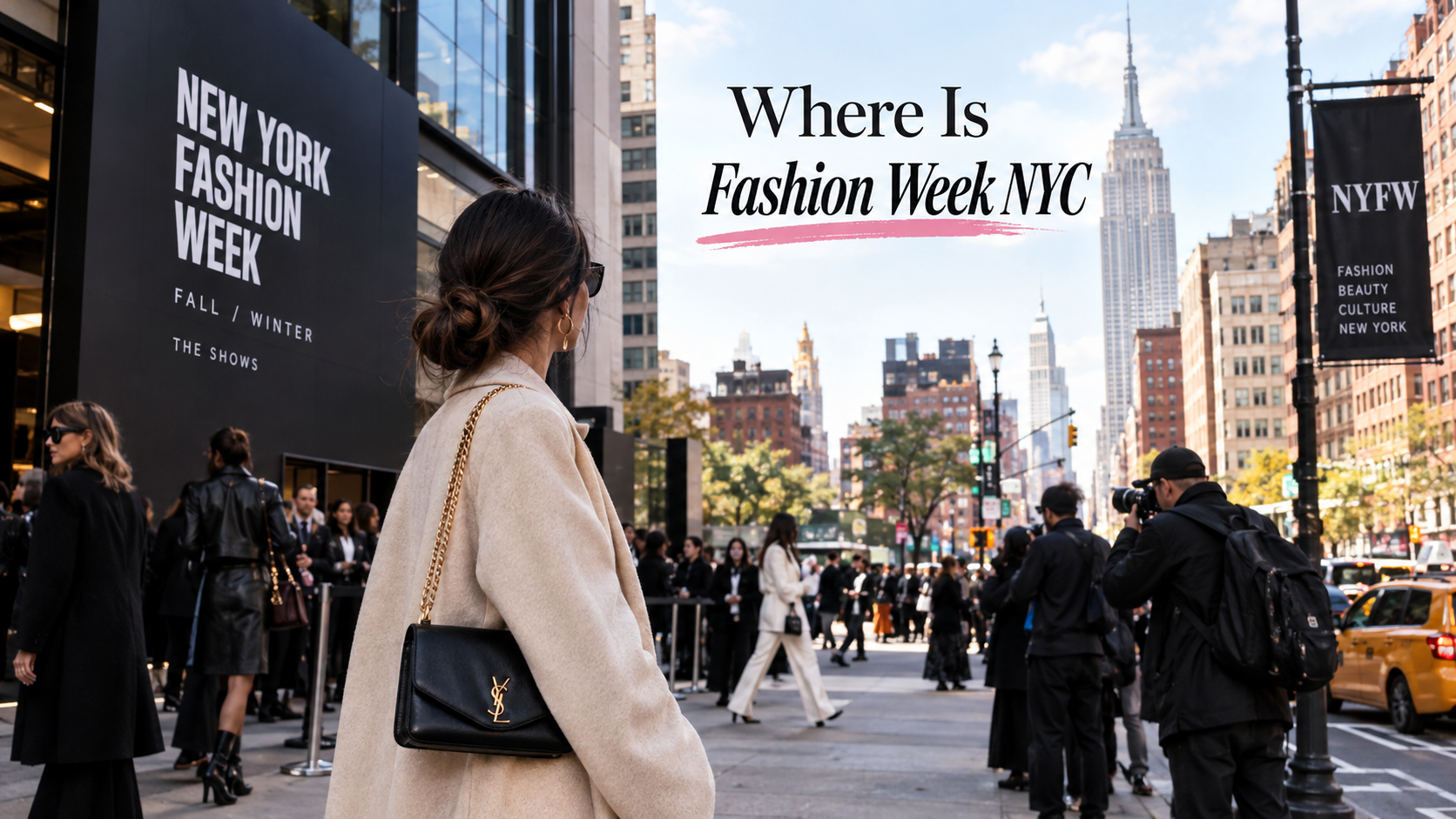
Where Is Fashion Week NYC and What Makes New York a Fashion Capital?
New York has always been a place where fashion is a living thing. With elegant showrooms on Broadway and jam-packed streets full of photographers, models, editors, and designers, the city turns into a live runway when fashion week takes place there. It is important for everyone who is going to visit New York or simply interested in fashion to have some basic information about the place. Where is Fashion Week NYC? This question looks like something very simple at first glance, but the answer lies in several places rather than in one permanent building.
It all changes when the official schedule starts working. All of a sudden, an ordinary street in Manhattan is crowded by people wearing amazing clothes for the upcoming show. Collections are demonstrated, photographs are taken, and fashion people go from appointment to appointment all day long. While all events take place mostly in Manhattan, each season may offer you something else. The knowledge of main fashion districts and venues can help visitors understand why New York is still an important place for the whole fashion world.
Comprehending New York Fashion Week
New York Fashion Week, referred to as NYFW, is one of the most notable fashion events globally. The fashion week gathers fashion designers, models, buyers, journalists, stylists, photographers, celebrities, influencers, and other fashion industry professionals.
The fashion week does not have a form of one grand event in one building but can be considered rather a citywide fashion program. Designers and event producers choose locations for events based on the collection’s concept, size, production needs, and atmosphere.
There are events taking place in traditional venues and some in galleries, hotels, studios, rooftops, restaurants, or even unique architectural places. That is what makes NYFW unique.
The event has a seasonal schedule with significant collections appearing for the following fashion seasons. February fashion season has a fall/winter theme, and the September season is related to spring/summer collections.
Nevertheless, the fashion calendar is not set in stone, and designers can have their collections revealed in various formats, such as runway shows, presentations, online release, appointments, and private events.
Where is Fashion Week NYC held?
One of the first things that you need to know if this is your first time is that there is no set place that holds NYFW.
In the past, events for NYFW have taken place mostly in Manhattan, specifically Midtown, Chelsea, SoHo, Garment District, and even Lower Manhattan’s fashion scene.
However, Spring Studios is not the only place where fashion activity occurs. Depending on the season and designer, visitors may find shows and presentations in different parts of Manhattan.
This means someone planning to attend should always check the official event schedule and individual designer information rather than assuming that every show will happen at the same venue.
The changing locations also create an interesting experience for fashion fans. Instead of entering one giant exhibition center, visitors can find themselves traveling through different neighborhoods, each offering a different side of New York.
The Role of Manhattan in NYFW
Manhattan plays a major role in New York’s fashion identity because many important fashion businesses, media organizations, designers, agencies, showrooms, and creative spaces are concentrated there.
The island also offers something that fashion events need: variety.
A designer looking for a minimalist environment might choose a contemporary studio. Another designer could want an industrial warehouse atmosphere. Someone presenting an elegant evening collection might prefer a historic building or luxury hotel.
Manhattan can provide all of these settings within a relatively compact area.
Such a geographic cluster is particularly convenient for people working in the industry. In a tight schedule during fashion week, editors and buyers might have several meetings to attend on the same day. The presence of various venues in the city means that there will be no need to travel out of the fashion district itself.
Nevertheless, for visitors this schedule might prove to be very hectic. Traffic in New York, delays in the subway, security checks, the registration process, and walking to different venues might considerably lengthen a short trip.
This is why fashion week participants always carefully choose their route.
Spring Studios and the Tribeca Connection
Spring Studios in Tribeca has become one of the most recognizable locations associated with contemporary NYFW.
The venue provides large spaces suitable for runway productions, presentations, media activities, and other fashion-related events. Its location in Lower Manhattan also places attendees close to one of New York’s most creative neighborhoods.
Tribeca itself has an atmosphere that works naturally with fashion. Historical architecture, contemporary cafes, galleries, and thoughtful streetscapes make a great setting for street photography.
The area takes on a completely new atmosphere during the fashion weeks. People are dressed up in their outfits, photographers search for something to photograph, and professionals move from one event to another.
If you like fashion photography, the surrounding streets can be as interesting as the runway itself.
Street style has turned into a significant element of fashion weeks nowadays. A person does not necessarily need an invitation to observe the atmosphere around fashion events, although access to official shows is generally controlled by organizers and individual brands.
Chelsea and the Fashion Scene
Another district of Manhattan that has been significant in the development of New York’s culture is Chelsea.
Chelsea, famous for its galleries, restaurants, design firms, and modern look, could serve as an excellent venue for fashion shows.
The neighborhood is particularly interesting because fashion does not exist there in isolation. Art and design frequently overlap with clothing, photography, architecture, and visual culture.
This relationship becomes obvious during fashion season.
A collection might be presented in a gallery-like space, photographed against an artistic installation, or supported by a creative concept that connects clothing with another discipline.
For fashion lovers exploring New York, Chelsea can therefore offer more than a single show. The neighborhood itself can become part of the fashion experience.
The distinctiveness of SoHo is known because of its architecture, shopping streets, boutiques, and fashionable image.
SoHo and Street Style
While all the NYFW shows do not take place in SoHo, the neighborhood still has something to offer for fashion as well. SoHo’s streets become very popular among photographers and fashionistas, especially when fashion weeks take place somewhere else in Manhattan.
SoHo is also quite helpful in studying the economic aspect of fashion.
There are luxury shops, independent boutiques, international brands, and upcoming designers in one and the same environment. Visiting SoHo during the season of fashion can be seen as visiting different layers of the industry.
There is runway fashion presented by the works of designers, retail fashion represented by brands, and personal fashion of the pedestrians.
This mixture is one reason New York fashion can feel less separated from everyday life than it appears from a traditional runway photograph.
The Garment District and New York’s Fashion History
The Garment District provides another important piece of the story.
As part of Midtown Manhattan, the neighborhood has traditionally had connections with fashion in that it was linked to the making of clothes, manufacturing, wholesale operations, and designers, among others in the fashion chain.
Though the industry’s structure has greatly transformed over time, it still maintains its connections to the city’s fashion past.
Walking through the area offers a different perspective compared with visiting a polished runway venue.
A fashion show represents the finished product. The Garment District represents many of the processes that help turn an idea into clothing.
Sketches become patterns. Fabrics are selected. Samples are created. The clothes are adjusted and ready for manufacturing.
This unseen activity is crucial in comprehending the reason New York emerged as a fashion city.
Why New York Became a Fashion Capital
New York’s influence did not develop overnight.
The growth of the fashion industry in the city was through manufacture, trading, immigration, retail, media, design education, and entrepreneurship.
Location also played a role in bringing together American consumers with global fashion trends and enabling local designers to build up their visual language.
Over time, New York became associated with a fashion style that could be practical, modern, experimental, commercial, and highly diverse at the same time.
This diversity remains one of the city’s strongest characteristics.
Luxury fashion brands, independent designers, streetwear labels, new and emerging designers, sustainable brands, and even designers experimenting with culture.
These all are featured at one fashion week, making it impossible to characterize fashion week by a single visual identity.
Rather, it is characterized by the city itself.
What Goes on at Fashion Week?
Fashion week is more than just runway shows.
In addition to runway shows, a season can involve appointments, showrooms, preparations backstage, media interviews, parties, networking, photo shoots, and brand activations.
For the designer, the runway is where the fruits of months of hard work will be shown off
Prior to the arrival of the guests, the team works on lighting, sound, seating arrangements, styling, hair and makeup, steaming the clothes, model casting, and back stage preparations.
The end result of this may be a presentation that lasts only a few minutes.
But these minutes might symbolize many weeks, or even months, of creative and logistical effort.
For the guests, this process could appear extremely rushed.
They might come to the event, take some photos, see a presentation, talk to the professionals, and go to the next place right away.
Who Can Participate in New York Fashion Week?
It varies based on the particular event.
All events held during fashion weeks are not accessible for everyone from the general audience. There might be invitation-only, registered, ticketed, or application fashion week activities.
Invitations for industry professionals may come due to their position within the business or any personal connection with brands, media, retail firms, or fashion circles.
There also are different strategies used by fashion designers when it comes to accessibility issues.
Some are more focused on buyers and fashion editors, and some create public events to attract more attention.
Digital media have altered the situation significantly. Now, a person can watch fashion content, follow fashion designers, or look at the backstage from anywhere without traveling thousands of miles.
In conclusion, physical presence is not the only way to participate in fashion week anymore.
The Development of Street Style into an Aspect of Fashion Week
One of the most interesting aspects of fashion week has been the development of street style.
Whereas years back, all the focus was on the runway, today, there are many instances where photographers spend considerable time outside venues looking for good outfits to photograph.
Some of the people that have been photographed may be celebrities or well-known fashionistas, but it could also be editors, influencers, stylists, designers, models, and regular attendees with unique styles.
Fashion week has developed a new dynamic due to this trend.
Someone who is entering a show may become part of the story told about the event without having walked down the runway.
Social media has played an important role in driving this evolution.
An outfit photographed outside a venue could end up circulating in the social media space in a matter of minutes.
Tips for Visiting Fashion Week
If you are planning to visit New York during fashion week, preparation will come in handy.
First, check the official schedule and verify where all the events you plan to attend take place. You should not depend on older publications since the venue and schedule of the event could have changed.
Second, give yourself additional traveling time.
New York is a huge city and fashion weeks are always busy. What might seem like a short distance on a map could end up taking much more time due to traffic.
Comfort is also important.
Visitors during fashion weeks are mostly concerned about how they look. Walking from one event to another might require a lot of effort which means you need to be comfortable with your shoes and clothes for the whole day.
Finally, it would help if you also brought a portable phone charger since navigating through events, tickets, and posting on social media might end up draining your phone very fast.
Lastly, flexibility is key.
Fashion weeks are never predictable.
Fashion Week Outside the Runway
One of the major misconceptions regarding fashion week is that everything takes place on the runway.
However, much happens off the runway.
Designers meet up with buyers. Public relations teams communicate with media organizations. Photographers create editorial material. Models attend fittings. Stylists coordinate looks. Makeup artists and hairstylists prepare for shows.
There are also business conversations that rarely appear in photographs.
Orders, joint ventures, partnerships, retail opportunities, licensing talks, and media coverage may all become a part of the larger Fashion Week ecosystem.
That is why it is relevant not just in terms of creativity but also in terms of business.
A collection may be stunning, but fashion is also an industry. The people attending fashion week often have professional goals that extend far beyond the runway itself.
The Changing Future of NYFW
Fashion Week is still changing because of technological advancements that have brought about new ways in which people interact with fashion.
Streaming fashion events live on social media platforms has expanded the reach of the events. Social media platforms enable designers to talk directly to their fans. Digital presentations can reach viewers without requiring everyone to travel to New York.
At the same time, physical events remain valuable.
Fashion is a visual and social industry, and being in the same room can create a different experience from watching a screen.
Designers are also exploring ways of presenting their collections.
Catwalk shows still hold their importance; however, presentations, installations, interactive events, and campaigns are now also part of the fashion calendar.
Such an approach to combining the old and the new enables New York Fashion Week to be connected to its past and present at the same time.
How New York’s Neighborhoods Influence Fashion
The reason why the city is a good fashion spot is because each of its neighborhoods has something different to offer.
Tribeca offers a polished creative atmosphere. Chelsea connects fashion with contemporary art. SoHo brings together shopping, architecture, and street style. Midtown reflects the business and historical side of the industry.
These differences help create a fashion week that feels larger than a collection of individual shows.
The city itself becomes part of the event.
The designer can set the tone using a certain building. The photographer can make use of a street within the neighborhood. A visitor can discover a boutique while traveling between events.
Thus, New York Fashion Week does not simply exist in New York.
What Makes the Event Memorable?
There are plenty of factors that make a fashion week memorable.
A designer might cherish it for the chance to showcase their collection after all those weeks of preparations.
For a model, it might be a great business opportunity.
For a photographer, it could be the realization of some unexpected street-style shoot.
For a visitor, it could simply be standing in front of a venue and understanding that people who represent different countries of the fashion world are passing the same street.
All these small incidents contribute to the ambience around a fashion week.
The clothing itself is certainly very important, but the people, venues, architecture, music, photography, and energy of the city are equally significant.
It is the combination of all these elements that makes New York so fascinating for a fashion week.
Questions That Are Frequently Asked
Is New York Fashion Week organized at one venue?
Not necessarily. Fashion Week makes use of various venues across New York, with most events being held in Manhattan. Venues vary depending on the season, fashion designer, event format, and other considerations.
In what months is New York Fashion Week typically held?
The February and September seasons are part of the traditional fashion calendar, with February normally hosting designs for future fall-winter seasons and September featuring spring-summer designs.
Is the general public allowed to attend New York Fashion Week?
Yes, but only some of the events are open to everyone else. There are fashion week events that are invitation-only.
Which neighborhood is connected with New York Fashion Week?
No particular neighborhood is connected with the whole fashion week. Tribeca, Chelsea, SoHo, Midtown, and Garment District are all neighborhoods in Manhattan where various events for the fashion week have taken place.
Is there an opportunity to experience fashion week without going to the runway shows?
Yes, fashion districts can be explored, street style observed in event areas, boutiques and exhibitions visited, and official online coverage can be viewed.
Conclusion
Finding out where Fashion Week NYC takes place requires not just identifying the single place but realizing the link between Fashion Week and the city itself. The ambiance, creativity, and networking between fashion season and Tribeca, Chelsea, SoHo, and Garment District shape fashion season despite the changes in locations of fashion events. People coming to visit the city should be ready to deal with busy schedules of events and some difficulty accessing the events. However, this is the beauty of such visits. Every season is unique; new collections, locations, people, stories, and visual presentation keep being added to the history of fashion in New York.
Anyone who is interested in clothing and fashion would find it fascinating to visit New York during the time of fashion season because it will allow them to have a better understanding of how an international business works. There is more to it than just the show on the runway. It includes designers, models, photographers, stylists, buyers, writers, artists, and many others who are involved in the process of developing the collection. Fashion week allows seeing how much clothing can relate to architecture, commerce, art, media, and ordinary life. New York still represents a place where all these spheres meet and interweave.