What Are Different Types of Fashion Styles? 15 Amazing Styles to Break Out of a Fashion Rut
It’s more about picking clothing pieces from your wardrobe. It is an understated expression of one’s personality, state of mind, culture, and even confidence without uttering a word. Once one begins to delve into such issues as ‘what are different types of fashion styles,’ one may notice that fashion is much bigger than just being trendy.
Think about a bustling street where everyone looks differently. Someone is wearing neat minimalistic outfit, while someone likes vintage pieces, and someone chooses daring streetwear. Such diversity makes fashion fascinating. Having knowledge about different styles will allow you to realize what fits you best.
Understanding Fashion Styles
A fashion style is basically a certain way of dressing. This can be determined by such factors as personality, lifestyle, culture, career, music, history, and current trends. There are some people who naturally like simple outfits, and there are some people who are attracted by playing with various colors and patterns as well as using various accessories.
It means that you do not have to belong to a particular fashion category all the time. Actually, most of people try to combine several fashion styles at once. For example, a person might dress in a minimalist style on weekdays and go to an event dressed in boho style on weekends.
Fashion is a dynamic concept, which means that some fashion styles, which used to be outdated, can become popular again after many years.
Classic Fashion Style
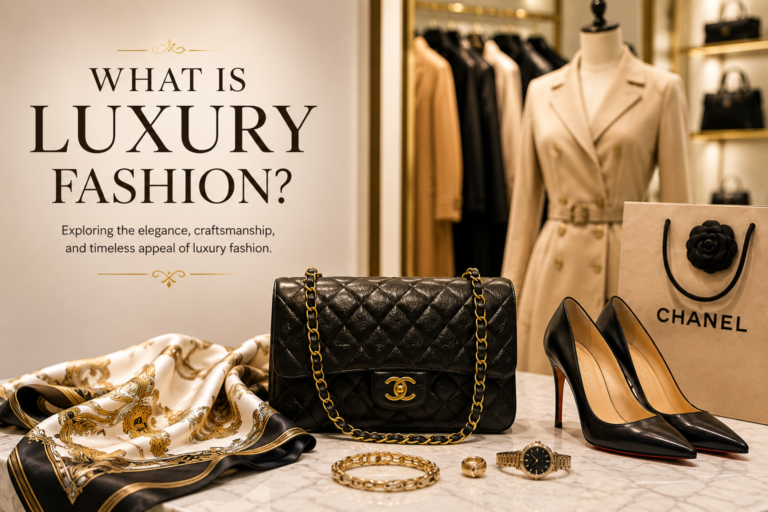
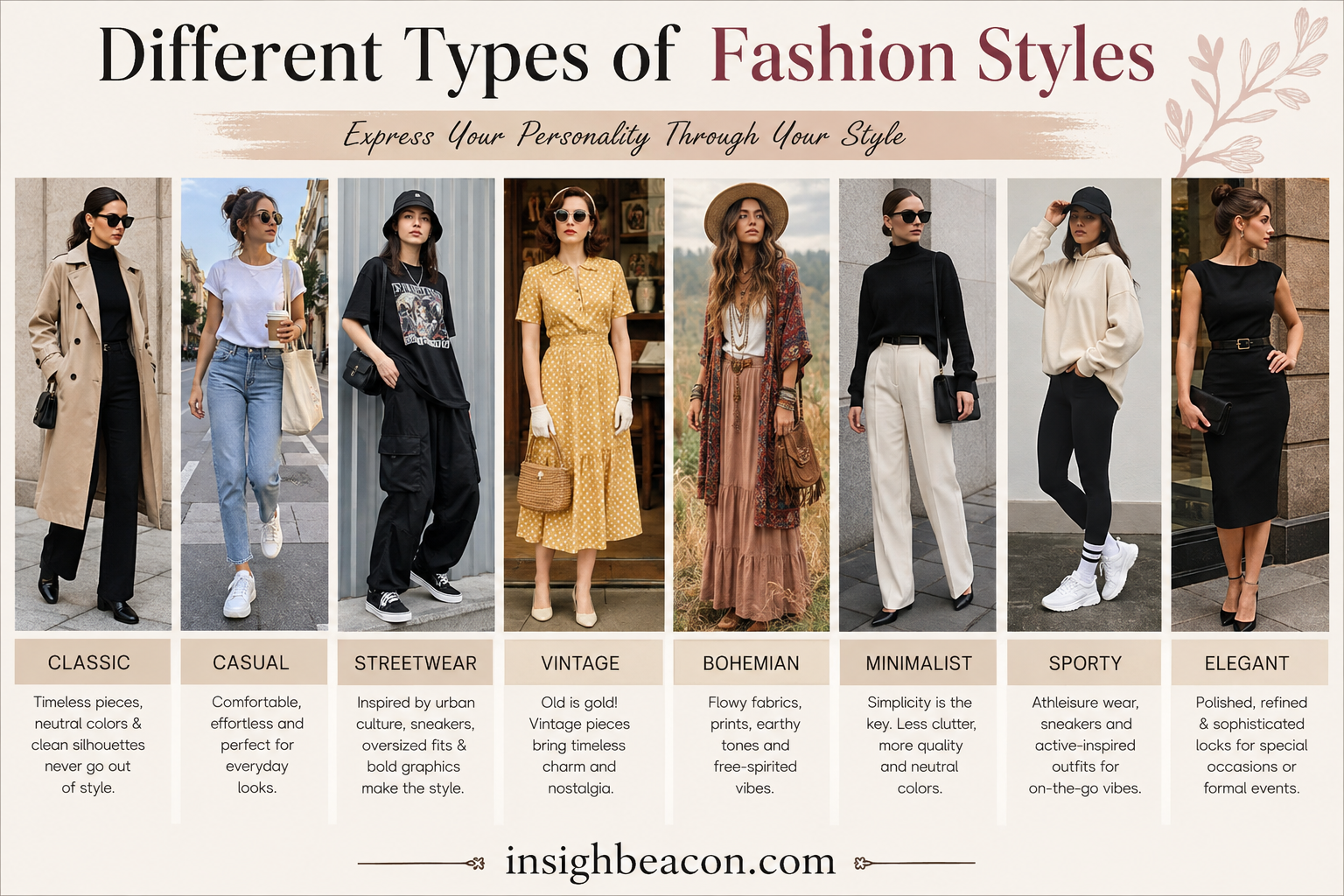
Classic fashion comprises clothing items that last for a long time as opposed to fleeting fashions. It is closely related to what luxury fashion is: lasting pieces made well.
The biggest strength of classic fashion lies in its ability to be versatile. The combination of classic pieces allows one to wear an outfit to school functions, family gatherings, formal settings, or casual events.
A typical classic fashion usually includes:
Sleek silhouettes
Neutral or subdued colors
Plain designs
Good-quality materials
Classic accessories
Well-constructed outfits
What makes classic fashion so appealing is that it is not likely to go out of fashion any time soon. It will take you years before a simple blazer or perfectly designed shirt becomes unwearable.
Casual Fashion Style
The casual style of fashion emphasizes comfort yet at the same time remains a neat one. This style of fashion is among the most convenient to be applied in day to day life since it involves very little in terms of styling.
Such outfits include jeans, comfortable pants, T-shirts, sneakers, hoodies, and even light jackets. Casual does not necessarily mean careless, and it is only a matter of styling that will determine whether your outfit will look neat or careless.
This is shown in the case where a plain shirt is worn together with straight pants and clean sneakers.
What Are Different Types of Fashion Styles? A Look at Popular Categories
Fashion tends to become more understandable when the categories are considered one at a time. Even though different styles may have common features, there is something distinct about each fashion style that allows it to be recognized.
Minimalist Fashion
The idea behind minimalist fashion is that of minimalism. This means creating looks using as little detail as possible rather than trying to add many details to complete an outfit.
Colors that are often used in minimalist looks include neutral tones such as white, black, beige, gray, and navy. Clean lines are also characteristic of minimalist clothing.
There might be a few pieces in a minimalist wardrobe that could be worn in different combinations.
Streetwear Fashion
Streetwear fashion is a result of the urban culture, and it has close ties with music, skateboarding, sports, and youth culture. Big shirts, hoodies, sneakers, graphic prints, cargo pants, and caps all form part of this fashion style.
Streetwear fashion in contemporary times is very creative. Some people will do it subtly with plain colors, and some will go for something more colorful.
What makes this fashion style special is that clothing becomes a means of cultural expression. Wearing a graphic shirt or wearing certain sneakers will say a lot about you without saying anything.
Vintage Fashion
Vintage fashion draws on the previous decades. As opposed to recreating the look from an earlier period, modern vintage fashion often merges different periods with current trends in clothing.
A person may opt for a retro-style jacket combined with current pants. Someone else might prefer prints and cuts typical of a certain decade.
Vintage fashion suits those who like to tell a story through their clothes. There was a unique palette of colors, shapes, fabrics, and cultural impact in each of those eras, offering a lot of room for experimentation in this style.
Bohemian Fashion
Bohemian fashion, or boho fashion style, consists of loose silhouettes, artistic influences, flowing fabrics, natural colors, and ornate prints.
Loose skirts, airy tops, layered pieces, accessories of natural appearance, and printed garments may all serve for creating a bohemian look.
This fashion style is highly expressive, and it suits those who enjoy experimenting with various pieces and those who like clothes that are not very structured visually.
Stylish Elegant Fashion
Elegant fashion involves stylish fashion without being too bold. This may involve proper tailoring, balanced colors, elegant accessories, and well-chosen clothes.
Elegant attire can be a single dress, well-made pants, a decent blouse, or a suit. Accessories are chosen in such a way that they match the overall look of the attire.
One of the important elements of elegant fashion is balance. Too many details can cause confusion in an outfit. Sometimes, simple outfits look more elegant than complex ones.
Sporty Fashion Style
Sporty fashion draws ideas from sportswear but is not restricted to the participation in physical activities. Comfortable sports shoes, sweatshirts, track pants, lightweight jackets, and loose tops can be typical sporty clothes.
This fashion became particularly fashionable when people started wearing sportswear elements in their regular clothes. Comfort and mobility are its key features.
Sporty fashion can also be combined with other fashions. For instance, you can combine an athletic jacket with traditional trousers, making the combination sporty and at the same time conservative.
Preppy Fashion Style
Preppy fashion is inspired by classic school and college clothes. Examples of preppy garments include polo shirts, knit garments, shirts with collars, pleated skirts, loafers, cardigans, and suits.
Color and patterns may be varied; nevertheless, the look remains neat and well-organized.
Preppy fashion has evolved significantly since its emergence. The current versions of preppy fashion may include oversized garments, modern sneakers, or unconventional combinations of colors while preserving the polished base of the style.
Edgy Fashion Style
Edgy fashion is meant to be more visually attractive. The fashion style may incorporate dark colors, unconventional silhouettes, accessories that attract attention, layers, and unique textures.
The edgy fashion does not have to be limited to one strict set of rules. It offers people some space for creativity and experimentation.
For instance, one person may pair his/her plain dark clothes with an eye-catching jacket and accessories. Another one may contrast textures to make plain clothes more remarkable.
The key point is to feel confident in the chosen combination rather than wearing just eye-catching clothes.
Romantic Fashion Style
Feminine shapes, light details, soft materials, floral prints, and gentle colors are all common features of romantic fashion. Dresses, skirts, blouses, accessories, and decorations are used in romantic fashion.
From more classical or feminine clothing to more modern clothing in a simple silhouette, the style varies greatly.
A great advantage of romantic fashion is the ability to choose clothes that will be elegant and soft visually but not too formal.
Y2K-Inspired Fashion
Y2K-inspired fashion refers to outfits that are inspired by the fashion trends of the late 1990s and early 2000s. Playful colors, distinctive accessories, fitted or loose silhouettes, and nostalgic references are used in Y2K-inspired fashion.
Unlike the outfits of that time period, modern outfits are not replicas. They include the elements of those days’ fashion in a modern version.
It becomes clear why the Y2K fashion became popular again. Fashion goes in cycles, and once outdated trends might become trendy for a new generation.
Fashion Inspired by Dark Academia
Dark academia gets its inspiration from the old-fashioned academic setting, literature, old libraries, old buildings, and classical academic aesthetics.
It features items such as knit sweaters, trousers, button-down shirts, and coats, among others. Dark academics come in different colors but mostly brown, charcoal, cream, and very neutral colors.
The style is not necessarily about wearing a particular outfit but rather creating an environment using fashion pieces.
Choosing Your Personal Style
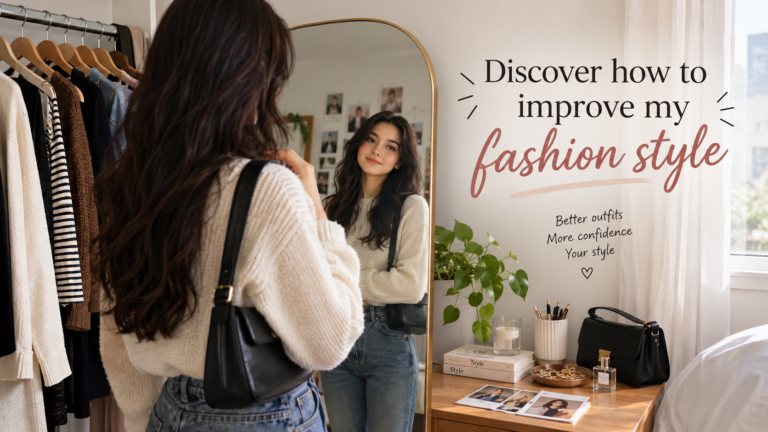
It is not necessary to decide on your personal style right away. Begin by analyzing the clothes that you like wearing. There may be certain patterns in your preferences.
Ask yourself:
Do I like simple or detailed clothes?
Do I like casual or formal clothes?
What colors do I usually go for?
Do I like accessories?
Do I prefer fashionable or vintage clothes?
Is comfort important to me?
What do I look good in?
Answering these questions may help you understand your existing patterns.
Another thing that is recommended is creating an inspirational set of clothes. Collect clothes that attract you and analyze them after some period of time. You will see that you tend to pick up similar clothes.
Mixing Various Fashion Categories
There is nothing wrong with mixing various fashion categories because there is no rule that says that you should follow one fashion category only.
Thus, classic trousers can go well with a casual shirt and sneakers. Also, a jacket inspired by vintage clothes can be worn with simple clothes, and minimalist outfits can be complemented by one accessory only.
It is essential to balance the overall look. Otherwise, every element of the outfit will seem as if it stands alone. Usually, combining elements of two different styles works well if you choose one dominant style.
Fashion Trends vs Personal Style
It is okay to follow fashion trends sometimes, but you are not obligated to wear everything that is popular at the moment. Something can look very cool in pictures and not suit you in real life. Knowing what is trend in fashion helps you choose only what truly suits you.
Personal style comes with the understanding of what you really like and what suits you. Thus, it does not mean that you should change your clothes every time fashion changes. You can add some trendy elements to your existing wardrobe.
This way, you will be aware of fashion while not buying new things every time.
How to Build a Versatile Wardrobe
It is possible to start a versatile wardrobe from some basic pieces. Neutral pants, tops, outerwear, shoes, and accessories can give you a starting point for lots of looks.
When you have such pieces in your possession, you can add more pieces according to your taste.
One can think of a wardrobe as a building block. Just by wearing different pieces of clothes together, you can get a few different looks and try new styles of dressing up.
The Importance of Accessories
While accessories are quite small in size, they can change your whole look dramatically. Bags, watches, scarves, belts, hair decorations, and jewelry can decorate your clothes without the need of making a total change in your wardrobe.
If you want to wear something minimalistic, only one accessory can be the center of your look. If you want to look classical, you can use accessories that will give additional refinement to your look.
Besides, accessories allow one to experiment with different styles in an affordable way.
Fashion and Personal Expression
The outfit does not need to show all about the person. The first might be wearing bright colors just because he/she likes such combinations, while the second prefers neutral outfits since simplicity comes easier to him/her.
There are no right or wrong fashion styles. The only thing that counts is how well your clothes suit your lifestyle, environment, comfort, and individual taste.
Your fashion style could change according to your interests and preferences. The person who wore sporty clothes during his/her previous year may suddenly like classics.
Mistakes People Make Exploring Fashion
The main mistake is buying clothes that you do not really like before knowing your own preferences. Being inspired by something is fine, but not all styles will suit your everyday wardrobe.
The next error is trying to imitate the whole outfit instead of learning why exactly it looks great on someone else. Maybe it is the combination of colors, silhouette, layers, or accessories that you like.
Identify what you like and apply the elements to your own wardrobe in order to create a natural look.
Frequently Asked Questions
How can I discover my personal fashion style?
Start by examining your existing wardrobe and identifying clothing you repeatedly choose. Save outfit inspiration and look for patterns in colors, silhouettes, fabrics, and accessories. Over time, these patterns can help you recognize your preferred aesthetic.
Can I combine multiple fashion styles?
Absolutely. Combining styles is one of the easiest ways to create a personal look. You can mix classic pieces with casual clothing, vintage items with modern basics, or minimalist outfits with statement accessories.
Does personal fashion style change over time?
Yes. Personal style can change as your lifestyle, interests, environment, and preferences develop. You do not need to stay committed to one aesthetic permanently.
Do fashion trends matter when creating a wardrobe?
Trends can provide inspiration, but they do not have to define your wardrobe. Choosing trends that fit your existing preferences is usually more practical than changing your entire style whenever a new trend becomes popular.
What is the easiest fashion style to start with?
Casual or classic fashion can be an easy starting point because both rely on versatile pieces. Once you understand what you enjoy wearing, you can gradually introduce elements from other aesthetics.
Conclusion
The question about how to know what are different types of fashion styles isn’t about learning some concepts but rather about realizing which type suits you. There are classic, casual, minimalist, vintage, sports, street, boho, elegant, and many other styles that help to express your character in different ways.
There is no need to make your style perfect, pricey, or permanent. Try to build on the basis of clothes you like, make experiments with combinations, and let your style develop naturally. Fashion is something personal, and everyone can have his or her own approach. The ideal wardrobe should be comfortable, versatile, expressive, and personal. Trends come and go, but confidence can last much longer. And if you want practical steps for how to improve my fashion style, start with the clothes you already own.