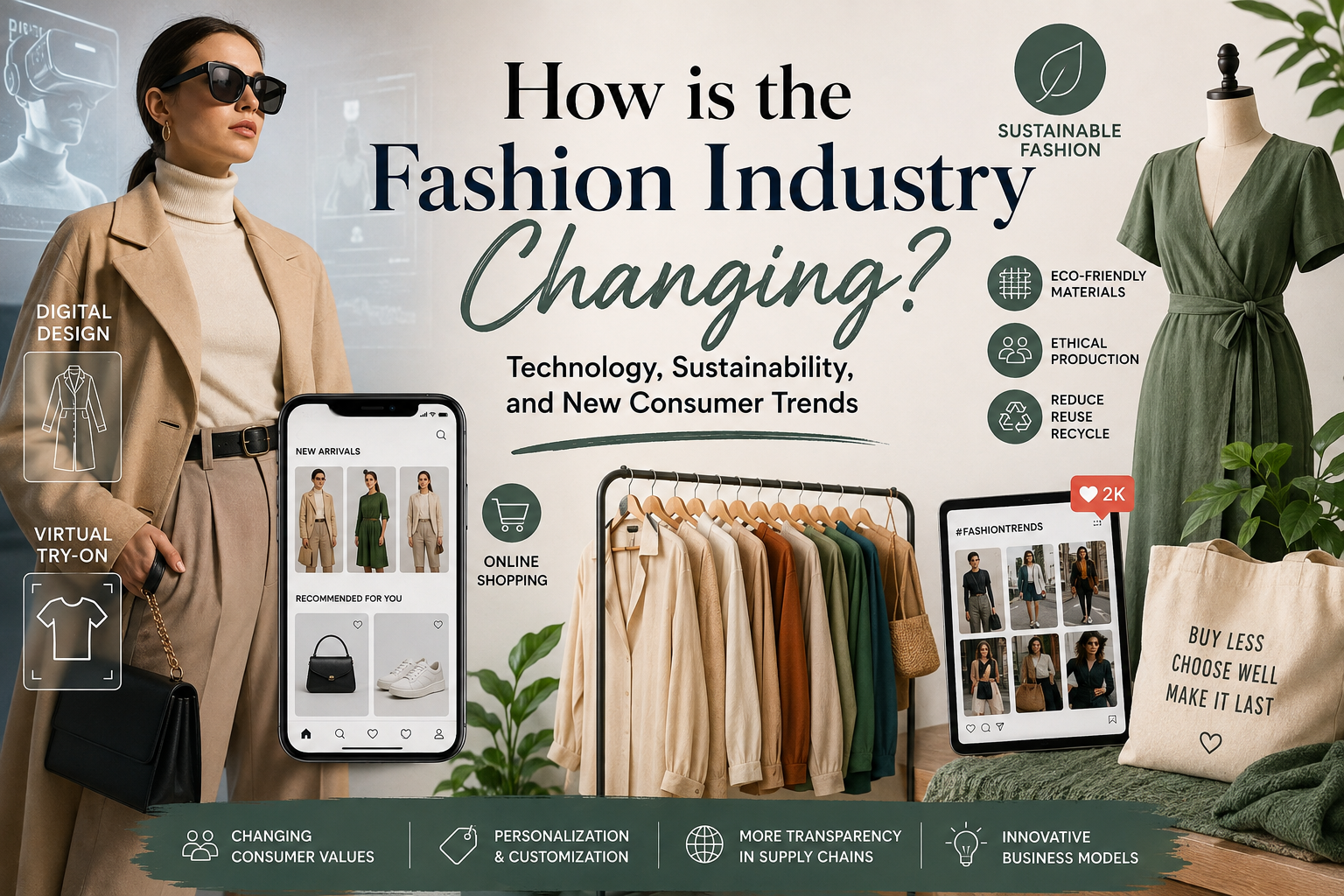
How is the fashion industry changing through technology, sustainability, and new consumer trends?
How is the fashion industry changing? The clothes worn by an individual can be viewed as an expression of one’s life, thoughts, and personality. However, fashion is currently experiencing its era of significant change that will affect all aspects of the industry. It encompasses a range of issues from production and design to marketing and sales, involving the use of new materials, technologies, sustainability, and digitalization.
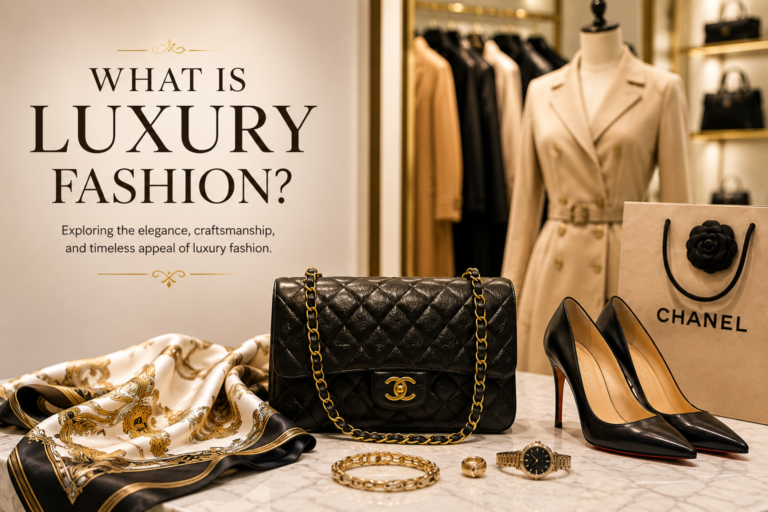
These changes occur across the entire spectrum of fashion, from luxury houses to indie designers, fast fashion brands, and online stores. The modern fashion world becomes more interconnected and technologically advanced, and more consumers become aware of fashion-related issues. At the top end, luxury fashion shows how craftsmanship and heritage adapt to the same changes.
New Era for the Fashion Industry
Think of visiting a clothes store 10 years back. Likely, you will walk around racks of clothes, have a conversation with the salesperson, try out different clothes, and then buy your favorite from the cashier. These days, all this can be done while you sit in your bedroom, use your smartphone, or watch fashion videos on social media platforms.
These differences signify much more than just ease of doing business. Fashion is a highly interrelated ecosystem with connections between technology, culture, business, and consumers. For instance, a fashion trend can emerge from a person who has created something and posted it on social media in the morning and become a marketable product in days.
Companies have realized the importance of speed and flexibility in their operations. Rather than waiting for seasonal collection launches, most brands analyze conversations, search habits, feedback, and purchasing trends of customers.
Fashion has become increasingly responsive to such changes. Speed, however, comes with its own problems, including overproduction, waste management, creativity, and consumption issues.
Technology Is Revolutionizing Fashion Design
Technology has evolved from being in the backdrop of fashion to becoming an integral part of the design process. Designers can now employ digital technologies to play around with shapes, textiles, colors, and designs without actually making any physical samples.
Digital fashion design can minimize the necessity of making numerous physical samples. The designer will be able to visualize a garment in three dimensions and make changes to measurements and other factors without immediately cutting any fabric. It can help save time, costs, and effort and facilitate collaboration even among creative teams based in distant nations.
AI is becoming increasingly important as well. Fashion companies can employ AI-enabled technologies to analyze trends, categorize products, and predict demand and customer preferences. Although technology cannot substitute human creativity, it can certainly help creative teams make better decisions. Fashion is just one of the applications of AI in everyday life.
Virtual sampling is another trend on the rise. Rather than making numerous physical samples, companies can make digital samples that will be employed in their marketing campaigns and presentations.
Thus, the fashion designer of tomorrow may spend just as much time working in the digital environment as working with paper and fabric samples.
Changes in Online Shopping Have Impacted Consumer Journeys
With the growing number of consumers preferring online purchasing, the discovery process has been entirely altered. No longer do consumers have to go through various stores to compare products; today they are capable of doing that within a few minutes online.
Mobile commerce has contributed further to this phenomenon. Search engines, social networks, fashion sites, and online marketplaces collaborate to provide an uninterrupted consumer journey.
For instance, one might be introduced to a jacket via a video, search for more similar products, read reviews, compare pricing, and order the product without stepping into a physical store.
It has prompted many companies to focus on improving the performance of their online stores by offering higher quality product photography, descriptions, sizing, and customer support. Otherwise, poor online experience will make customers move away from the site very quickly.
In addition, virtual try-ons are becoming increasingly popular among online retailers, as some already offer virtual visualization of the product, while others try to provide better sizing options.
Such technological advances have not fully replaced the traditional shopping experience; however, they are getting closer to it.
Increasing Importance of Sustainability
Perhaps the most significant transformation that the fashion industry has undergone recently is an increase in interest in sustainable practices. Customers have become much more curious about the origin of clothes, the materials used to make them, and how these items are disposed of when they go out of style.
All of the above has led fashion companies to look into such options as using recycled materials, organic fabrics, less environmentally damaging manufacturing processes, more sustainable packaging, and increased durability of garments.
Consumers are also more and more drawn towards the practice of purchasing less yet higher-quality clothing. Instead of considering clothes disposable, customers are looking into repairing, reusing, exchanging, and reselling items of clothing.
Circular fashion is especially relevant here. The concept is aimed at extending the lifecycle of the product and materials, unlike the traditional process of making the product, selling it and throwing it away.
Of course, sustainability is not an easy task. A firm might improve some aspects of its operations while failing to be sustainable in others. Therefore, customers’ interest in transparency is increasing.
What Changes Are Occurring in the Fashion Industry with Sustainability in the Forefront?
Sustainability has been creating changes in the fashion industry on a business and consumer level. Business practices such as materials, packaging, manufacturing process, and product lifecycle are under review.
Online resale markets play a key role in the change. Consumers will no longer be able to let their clothes go to waste by reselling them to other people who can benefit from them. This gives clothes another chance to live while changing the attitude towards pre-owned fashion.
Some rental services have affected the fashion industry as well. Instead of buying an outfit for a special occasion, some consumers choose to borrow one.
Some repair services have become popular as well. Customers can get assistance in repairing their damaged clothes.
These trends show how the fashion industry is shifting away from the ownership paradigm. Access, reuse, and longevity are becoming a part of the modern fashion industry.
How Has Social Media Changed Fashion Trends?
Traditionally, fashion trends were shared via magazines, television, famous people, and large-scale fashion events. Social media has significantly changed this pattern. That shift is central to what is trend in fashion today.
Nowadays, creators, stylists, artists, sportsmen, and even users themselves are capable of defining what people wear. One particular color, silhouette, accessory, or style can become popular with the help of one viral post.
As a result, fashion became democratized in many aspects. Consumers are no longer passive players who wait for the orders from fashion brands. They create and spread trends themselves.
However, social media also accelerated the process of fashion trends. One style may be very popular at one moment and disappear the next minute.
In order to cope with such dynamics, brands started to work with influencers and content creators. Instead of using classical methods of advertisement, companies began to cooperate with people who had established their relationships with particular audiences.
The best examples of such campaigns seem not to be ads at all, but rather a conversation between the company and its customers.
Increasing Importance of Personalization
Modern customers seek to buy things that are relevant to their needs and expectations. This makes personalization a key competitive tool for modern brands.
Online stores have the opportunity to make personalized offers based on the client’s previous activities, including the search, purchase history, and browsing behavior. Personalized offers via emails or product recommendations may make the shopping experience more convenient.
Some companies experiment with customizable products, allowing the customers to choose the color, materials, design, and any other aspects in order to create something unique.
However, modern technology allows doing it on a bigger scale than was possible in the case of customization before. Nevertheless, personalization raises some problems associated with the privacy issues.
The consumers require relevant recommendations and privacy of their personal data. That is why fashion brands have to find the balance between convenience and transparency.
Growing Pressures on Fast Fashion
Fast fashion has enabled consumers to wear trendy clothes at a relatively affordable price, but its negative effects have been criticized. It helps to know the brands considered fast fashion to see where the criticism lands.
It is not only about the rapid manufacture of fashion. It is also about consumption behavior, fabric waste, transportation, resource utilization, and limited longevity of many products.
Increasing awareness of consumers has caused some of them to shift towards slower fashion, which includes wearing basics, buying second-hand clothes, supporting ethical brands, or reducing impulse buys.
In response to growing pressure, fast-fashion businesses are reacting by using recycled material, resell programs, recycling options, and more transparency.
However, it is not enough to change only marketing messages. It is necessary to create some quantifiable progress in terms of manufacturing and consumption.
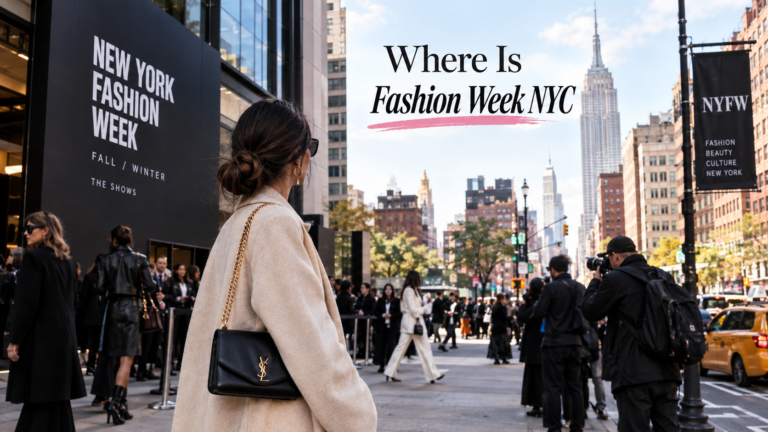
Fashion Weeks Are Getting More Accessible
Fashion weeks used to be considered industry events meant solely for buyers, editors, celebrities, and fashion professionals. Not anymore thanks to digital media.
Live streams, short video clips, behind-the-scenes footage, and social media posts ensure the viewers in any corner of the world can watch fashion shows live.
With more access, there is now another aspect to consider when presenting a collection. The fashion show must be appealing both for people who are physically present in the venue and for all those watching the show online.
Digital presentations and online marketing campaigns have become other tools available to designers to promote their collections.
The classical runway is not going anywhere, but now it has become just one element of the bigger picture.
New Business Models Are Appearing
Fashion companies are adopting business models that would have been unthinkable before.
Subscription programs, renting of clothes, resale sites, direct-to-consumer brands, limited releases, and made-to-order goods are revolutionizing the way fashion companies earn money.
In particular, made-to-order production is an approach that can help cut down excess inventory. In place of manufacturing lots of goods and waiting for them to sell, a company could make goods according to the actual demand for them.
Direct-to-consumer brands can also connect with their consumers independently from traditional retail channels. Thus, small firms get an opportunity to access consumers worldwide.
These models show that innovation in the fashion industry does not only involve fabrics and designs but also business strategies.
Consumers Are Becoming More Conscious
Perhaps the most important transformation is happening with shoppers themselves.
Individuals are becoming increasingly aware whether there is actually a need for the item, how frequently they will wear the item, if it matches their style, and if the values of the company match their values.
This does not mean that individuals are not enjoying fashion anymore; rather, individuals are becoming increasingly selective.
Individuals could buy an item that is in fashion and at the same time consider its quality and versatility. Individuals could go for used clothes since they give uniqueness at a reduced price.
Fashion is getting more personalized; individuals can mix old clothes with new ones and incorporate culture into fashion.
Creativity and responsibility will be the characteristics of the future.
In the future of fashion, there is likely to be an increased relationship between creativity, technology, and responsibility.
The technology can help with prediction and design. Technology can be used to cut down unnecessary sampling. The resale and rental of clothing may become common practices. The consumers will expect more information about the product before buying.
However, creativity will still be very important for the future of fashion. Fashion requires storytelling, emotion, culture, craftsmanship, and imagination—all things that technology cannot provide on its own.
The successful brands in the future are likely to be those that know how to combine these two worlds.
SEO FAQs about how is the fashion industry changing
What is the largest trend within the fashion industry?
The major trend is the fusion of technology and sustainability. Shopping online, artificial intelligence, social media, second-hand shopping, and sustainable production practices shape the operations of fashion brands and consumer behavior.
How does technology shape the fashion industry?
Technology has an influence on the fashion industry at all stages from design to sales and beyond. Technologies may assist in making quick and informed decisions.
Why does sustainability play a role in fashion?
Fashion is resource-intensive in terms of material usage, production process, logistics, and disposal. Sustainable fashion allows for extending garment lifetime and reducing unnecessary environmental effects.
Do consumers shape the fashion industry?
Yes, they do. The consumers drive the fashion industry by their purchases, social media activity, reviews, second-hand shopping, and demand for transparency.
What will fashion be like in the future?
In the future, fashion will be digital, personalized, inclusive, transparent, and focus on long lifecycle of products. Traditional craftsmanship and creativity will remain important along with technologies.
Conclusion
Asking how is the fashion industry changing shows an industry far past seasonal fashion lines and standard retailers. Technology, sustainability, social media, inclusivity, personalization, and business models are redefining the interactions of brands and customers. Fashion has become quick, interconnected, and responsible. Brands that respond to consumer demands and change carefully will enjoy better chances at staying relevant in an increasingly competitive industry.
Ultimately, the future of fashion cannot be determined by any single trend or piece of technology. Instead, it is influenced by the decisions of fashion designers, companies, creators, and consumers alike. As consumer demands change and continue to change, the question of how is the fashion industry changing becomes ever more relevant for anyone interested in fashion, style, business, and innovation.